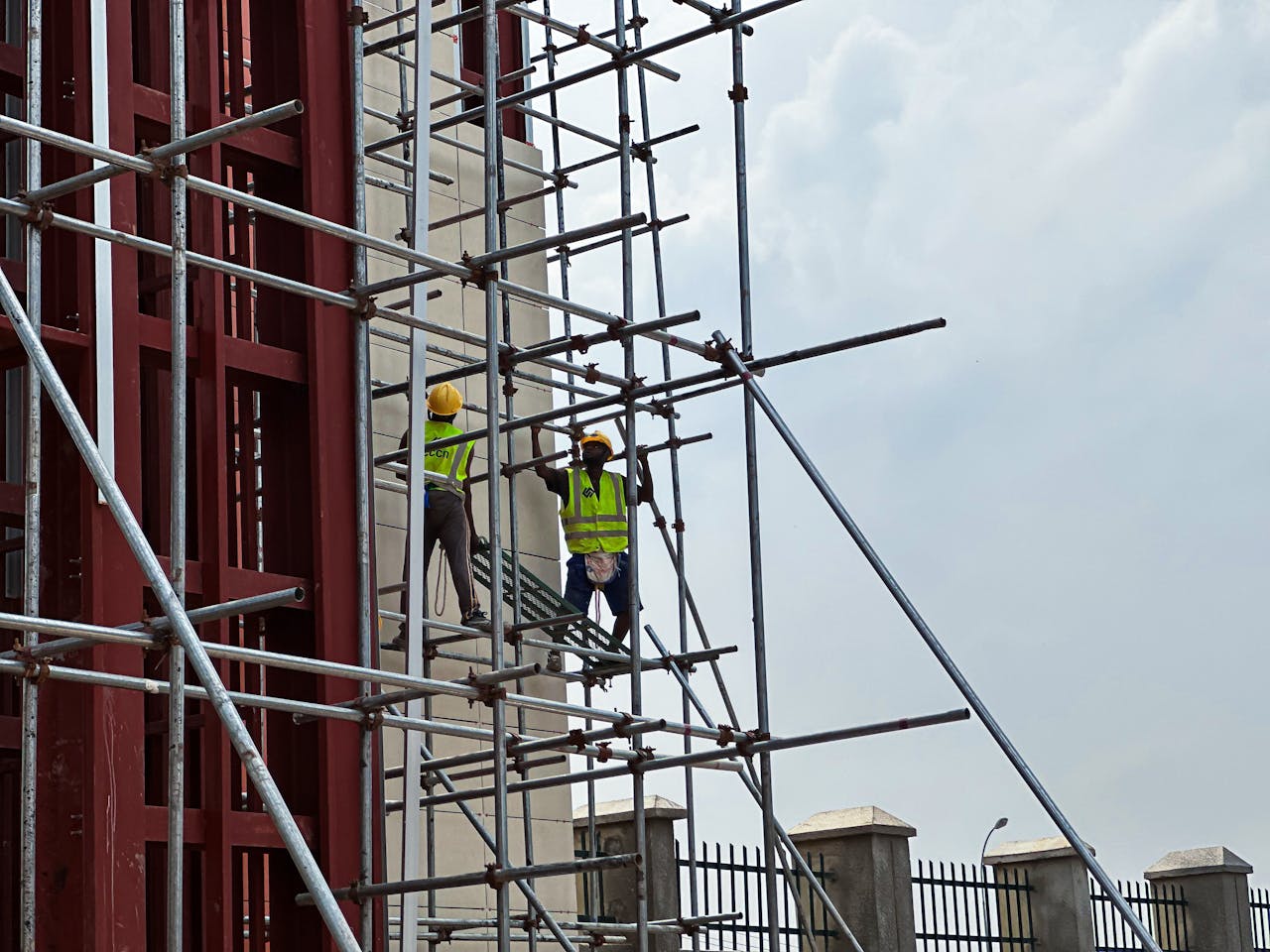
Most scaffolding quotes look reasonable until the extras arrive — and some of those extras are entirely avoidable if you know to ask about them first. Scaffolding hidden costs catch homeowners and commercial landlords off guard more often than any other part of a building project. The initial price covers the structure itself, but a range of scaffolding cost extras can appear on the final invoice: licences, extended hire, specialist additions, and access complications that nobody mentioned during the site visit.
Why Quotes and Final Bills Often Diverge
Scaffolders quote for what they expect. They measure the building, calculate the lift heights, estimate the number of standards and ledgers, and give you a price for erecting, hiring, and striking a standard structure. That price is often accurate — for a straightforward job with no complications.
The trouble starts when the job turns out to be anything but straightforward. A council permit gets delayed, a painter takes two extra weeks, or a neighbour won't allow access across their garden. Each of those scenarios can add a charge that wasn't in the original quote, and most of those charges are entirely legitimate. What catches people out is not dishonesty but a lack of upfront conversation.
Knowing which questions to ask before you sign puts you in a much stronger position. Here are the nine scaffolding hidden costs that come up most often.
The 9 Extra Scaffolding Charges to Ask About
1. Extending the Hire Period
Every quote includes a hire period — typically four to eight weeks for most domestic jobs. If your contractor overruns, you need extra time to sort a planning query, or bad weather delays the work, you move into a weekly or daily extension rate. That rate is rarely the same as the original weekly cost divided out; it tends to be higher per day than the base rate suggests.
Delays are more common than most homeowners expect. A roofer who runs two weeks behind, a window delivery that gets pushed back, or a spell of high winds that halts the work — all of these are normal project risks. Ask your scaffolder what the extension rate is per week before you sign. Any reputable firm will answer it plainly.
2. Road or Pavement Licences
If scaffolding needs to extend over or beside a public highway — a pavement, road, or verge — your scaffolder must obtain a licence from the local highway authority. In England and Wales this is usually a Section 169 licence under the Highways Act 1980. Similar requirements apply in Scotland and Northern Ireland.
The cost of that licence varies enormously by council and by how much of the road or pavement is obstructed. Urban borough councils in London can charge significantly more than rural district councils. The licence fee is typically passed through to you at cost, sometimes with an admin charge on top. Always ask whether a licence is required and what the likely cost is — it can run from under £100 to several hundred pounds for a longer hire.
3. Debris Netting
Standard scaffold structures do not automatically include debris netting or sheeting. If you are re-roofing, pointing, or doing any work that could drop material onto a public area, a garden, or a neighbouring property, netting will almost certainly be required. The HSE's Working at Height Regulations 2005 effectively demand it in many situations, and your insurer may also stipulate it as a condition of cover.
Debris netting adds to both the material and labour costs. It also catches more wind, which can mean additional ties are needed to keep the structure secure. Ask whether netting is included in your quote, and if not, request a separate line-item price so you know exactly what you are paying for.
4. Scaffold Alarm Installation
For longer hires or where there is a real risk of unauthorised access — particularly on commercial sites or properties left vacant during works — a scaffold alarm may be recommended or required by your insurer. These systems detect movement on the structure outside working hours and alert a monitoring centre.
The cost covers installation, hire of the alarm unit, and ongoing monitoring fees. It is not always flagged upfront in a domestic quote, but it is worth asking about if your property will be unoccupied for long stretches during the project.
5. Working Over a Public Footpath
Related to the licence question but distinct: if the scaffolding crosses or overhangs a public footpath, your scaffolder may need to install a covered walkway — sometimes called a fan or pedestrian tunnel — so that members of the public can pass safely beneath it. This is a specific safety requirement, not an optional extra.
A covered walkway adds significant material and labour cost. It requires additional tubes, boards, sheeting, and fixing time. It is not included in a basic quote unless the scaffolder has already assessed the site and confirmed it is needed. Always raise this at the quotation stage if your property sits directly above or beside a public pavement.
6. Weekend or Out-of-Hours Erection
Standard scaffolding is erected and struck during weekday working hours. If your project requires work on a Saturday or Sunday — to avoid disrupting a business, to comply with a neighbour's request, or because access is only available at weekends — there will be an out-of-hours premium.
The same applies to early-morning or evening starts. Scaffolding operatives working outside standard hours will be on higher pay rates, and that cost is passed on directly. If your schedule requires weekend work, get the premium confirmed in writing before you commit.
7. Lifting Concessions
On some sites — particularly where access is tight or materials need to be raised several storeys — a hoist or other lifting arrangement may be required. This is distinct from the scaffold structure itself and can involve specialist equipment and a separate hire agreement.
For most domestic jobs on a typical semi-detached or terraced house, this will not arise. But on larger properties or commercial buildings with awkward access, confirm upfront whether any lifting equipment is costed into the quote or sits outside it as an additional charge.
8. Removal of Bin or Vehicle Obstructions
Scaffolding lorries are large, and erection and striking requires clear access to the site. If bins, parked vehicles, skips, or other obstructions are in the way on the day of erection or strike, you may be charged a waiting or return visit fee. In some cases the scaffolder will need to arrange a parking suspension through the council — another permit with its own cost.
If the site has any obvious access constraints, raise them at the quote stage. A half-day wasted because a skip was blocking the road will appear on your final invoice as a legitimate extra charge, and it is one of the easiest extras to avoid with a bit of planning.
9. Neighbour Access Fees
Some scaffolding jobs — particularly on terraced houses, semi-detached properties, or party-wall situations — genuinely require access to an adjacent property to erect or strike the structure safely. The law does not automatically grant that right of access; your neighbour must agree, and they are under no obligation to do so for free.
If negotiations are complex or if a neighbour charges a fee for granting permission, that is another cost sitting outside the scaffolding quote. It is worth having this conversation with adjacent owners before you even invite quotes, particularly if you anticipate any friction. A good scaffolder will flag this risk during their site assessment.
These nine extra scaffolding charges cover the line items that appear most often on final invoices. You can estimate your scaffolding cost with the ScaffSource calculator to get a clear baseline figure, then work through each of these questions with your chosen firm to understand what the total is really likely to be.
Common Extra Scaffolding Charges at a Glance
| Extra charge | When it applies | Typical range |
|---|---|---|
| Hire extension | Contractor overruns or project delayed | Ask for the weekly rate upfront |
| Highway or pavement licence | Scaffold over or beside a public road | £80–£400+ depending on council |
| Debris netting | Re-roofing, pointing, or exposed public areas below | Request a separate line item |
| Scaffold alarm | Vacant properties, extended commercial hires | £100–£300+ installation plus monitoring |
| Covered walkway | Scaffold overhangs a public footpath | Significant — request a separate price |
| Out-of-hours erection | Weekend or early/evening starts required | Premium on labour — confirm in writing |
| Lifting equipment | Hoist or crane needed for access or materials | Quoted separately — ask if applicable |
| Return visit or waiting time | Access blocked on erection or strike day | Half-day or full-day labour rate |
| Neighbour access | Adjacent property access required | Negotiated — could be nil or substantial |
Questions to Ask Before You Sign
Armed with the list above, run through these questions with any scaffolding firm before accepting their quote:
- Is a highway or pavement licence required, and if so, what is the estimated cost?
- Does the structure overhang a public footpath — will a covered walkway be needed?
- What is the weekly extension rate if the hire period needs to increase?
- Is debris netting included, or is it a separate extra?
- Are there any known access complications — neighbouring properties, parked vehicles, or bin stores?
- Will erection or striking need to happen outside standard Monday–Friday working hours?
- Is a scaffold alarm recommended or required for this property?
None of these questions are unusual or awkward. Any scaffolding company worth hiring will answer them without hesitation. If a firm cannot give you a straight answer on licence requirements or extension rates, that is useful information before you commit. You can also find more practical pricing guides on the ScaffSource blog.
Once you have a quote with the extras itemised, get an instant price for your job using the ScaffSource calculator to sense-check whether the overall figure is reasonable for your area and project type.
The Short Version
Scaffolding hidden costs are rarely the result of sharp practice — they reflect genuine variables that only become clear once a job gets underway. Hire extensions, council licences, debris netting, covered walkways, and out-of-hours premiums are all standard industry charges. The difference between a final bill that surprises you and one that does not comes down almost entirely to the conversation you had at the quotation stage.
Ask the questions above before you sign. Get answers in writing where possible. And if you are not sure whether a quote is reasonable to start with, the ScaffSource calculator gives you a quick, honest baseline before you pick up the phone.