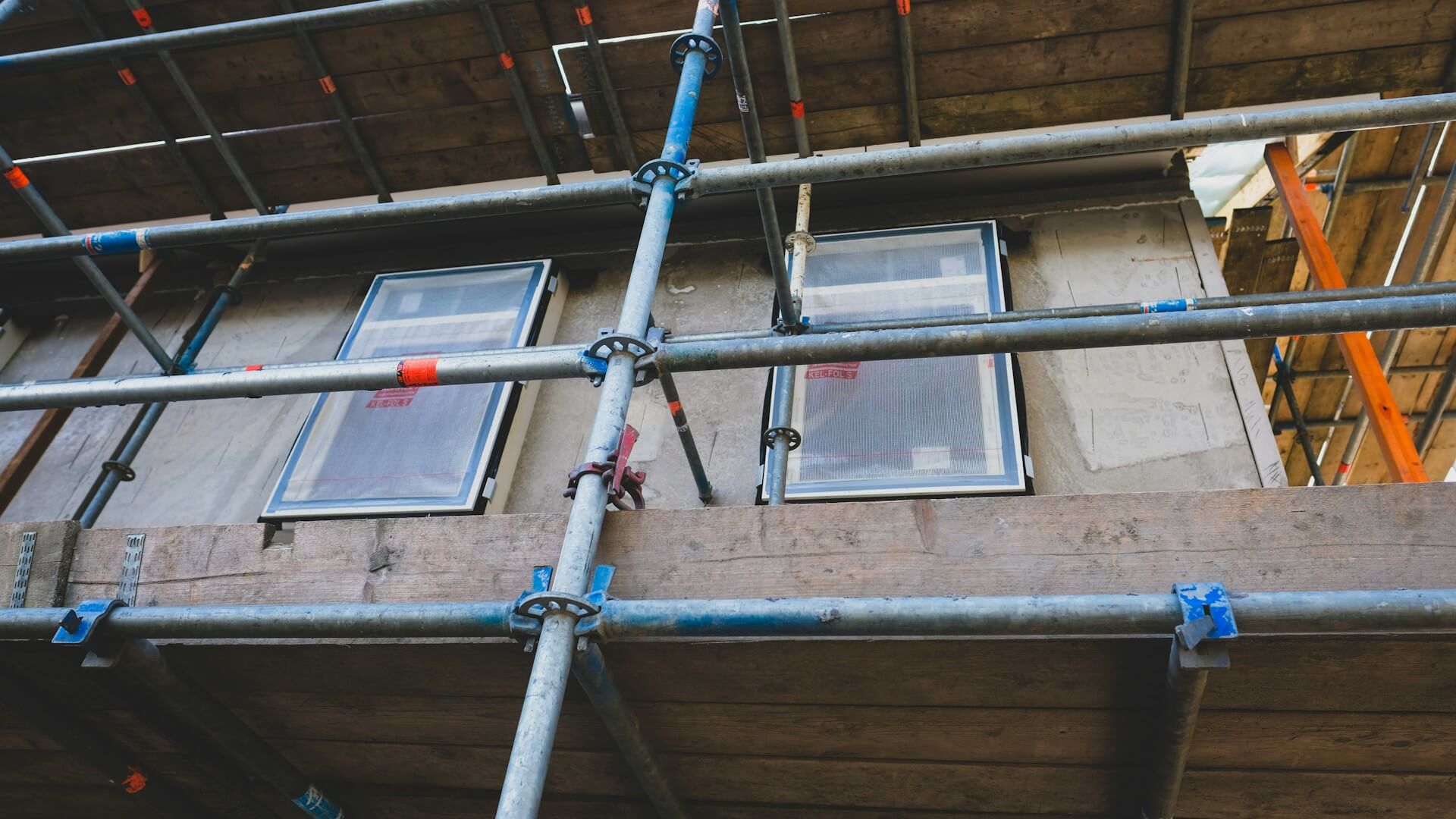
Getting scaffolding quotes from local companies doesn't need to be complicated. But most homeowners approach it backwards. They call three companies, get three wildly different prices, and choose the cheapest one, only to discover later that the quote excluded dismantling, or pavement licences, or weekly inspections. This guide walks you through the entire quoting process from a position of knowledge, so you can compare quotes fairly and spot the cowboys before they cost you money.
Whether you're planning a roof replacement, a full house render, or a loft conversion, scaffolding will likely be one of your largest line items. In 2026, a standard residential scaffolding job costs between £650 and £1,400 for the initial four-week hire period. The difference between a good quote and a bad one isn't just the price, it's what that price actually includes.
Key takeaway: A properly itemised scaffolding quote from a CISRS-registered company will include erection, dismantling, weekly inspections, and a clear continuation rate. Anything less than this is incomplete, and comparing incomplete quotes is impossible.
Before You Call Anyone: What You Need to Prepare
Walking into the quoting process unprepared wastes your time and the scaffolder's time. More importantly, it gives you less negotiating power and makes it harder to spot incomplete quotes. Here's what you need to have ready before you pick up the phone.
1. Property measurements or photos
Most scaffolding companies can quote accurately from photos alone, particularly for straightforward residential jobs. Take clear photos of every elevation that needs scaffolding. Include the full height of the building and any obstacles like conservatories, drainpipes, or adjacent structures. If you have measurements, even better: note the height of your property in metres and the approximate run of each side that needs access.
2. Project scope and timeline
Be clear about what work you're having done. "Roof replacement" tells a scaffolder you need roof-level access. "Full house render" tells them you need two lifts and possibly sheeting to protect windows. Your expected start date and project duration matter because scaffolding companies book weeks in advance, and your hire period affects the quote.
3. Access constraints
Does your property have narrow side passages? Is the only access through your house? Is your building listed, or in a conservation area? Are there overhead power lines? All of these factors affect both the feasibility of the job and the cost. Telling a scaffolder about access issues upfront prevents surprises later.
4. Public land encroachment
If scaffolding will extend over a public pavement, footpath, or road, a council licence is legally required. This typically costs around £140 per month and takes 1-2 weeks to process (longer in some London boroughs). Knowing whether you need a licence before you call means you can ask the right questions about who handles the application and whether it's included in the quote.
How Many Quotes Should You Get?
The industry standard is 2-4 quotes. Here's why that number works.
Two quotes gives you a comparison point. If both quotes are similar, you have confidence you're in the right ballpark. If they're wildly different, you know something is missing from one of them.
Three to four quotes gives you enough data to identify outliers. One quote significantly higher or lower than the others is a signal to investigate further.
More than four quotes creates diminishing returns. You'll spend hours on the phone repeating the same information, and most quotes in a competitive market cluster around the same price anyway. The time investment stops being worth it.
The danger of only getting one quote: You have no benchmark. A single scaffolder could quote £2,000 for a job that should cost £1,200, or quote £800 and leave out dismantling and the pavement licence. Without a comparison, you won't know.
Finding Local Scaffolding Companies
"Local" in scaffolding terms usually means within a 15-20 mile radius of your property. Companies charge travel time and fuel for jobs further afield, so staying local keeps costs down. Here's how to find reputable scaffolders in your area.
Google Maps + CISRS filter
Search "scaffolding companies near me" and check Google Maps results. Look for companies with good reviews (4+ stars), recent activity, and CISRS mentioned in their profiles or websites. CISRS (Construction Industry Scaffolders Record Scheme) is the UK scaffolding industry's certification body. If a company's scaffolders don't hold CISRS cards, they're not properly trained.
Trade association directories
The National Access and Scaffolding Confederation (NASC) and TG20:13 registered companies maintain higher standards than non-members. NASC's website has a member directory you can filter by location. Membership isn't a guarantee of quality, but it's a good starting filter.
Word of mouth vs online reviews
Personal recommendations from friends, neighbours, or your main contractor carry weight, but verify them. A company that did a great job five years ago might have changed hands or let standards slip. Online reviews are useful but treat them with scepticism—look for patterns across multiple review sites, not isolated complaints or suspiciously glowing endorsements.
What "local" actually means
A scaffolding company 30 miles away might quote you, but they'll factor in travel costs and they're less likely to prioritise your job if a closer customer needs urgent attention. Stick to companies within a 15-mile radius unless your area genuinely has no local options.
What to Ask When You Call
When you contact a scaffolding company, these are the questions that separate professionals from cowboys. If a company can't answer these clearly and confidently, move on.
Do you hold £10 million public liability insurance?
This is the industry standard, and it's required for pavement licences. £5 million is the legal minimum, but many councils won't issue licences without £10 million. Ask for a copy of the certificate.
Are your scaffolders CISRS-registered?
CISRS cards prove competency. A company with non-CISRS scaffolders is cutting corners on training and safety. Ask to see cards on the day of erection if you want to be thorough.
Is dismantling included in this quote?
Some companies quote erection only and charge separately for dismantling. This isn't necessarily a scam, but it needs to be explicit. A full quote includes both.
What's your weekly continuation rate if my project overruns?
Most quotes cover a standard 4-week hire period. If your roofer takes six weeks instead of four, you'll pay a weekly continuation charge. This is typically 2-10% of the original quote per week. Knowing this upfront prevents billing surprises.
Do you apply for pavement licences on my behalf, and is the fee included?
Most scaffolding companies handle pavement licence applications as part of the service. Some include the £140+ council fee in the quote; others pass it through as a separate charge. Clarify which applies.
How soon can you start, and what's the erection timeline?
Reputable companies book 2-4 weeks in advance. If a company can start tomorrow on a large residential job, they're either very quiet (not a good sign) or they're overcommitted and will let you down. A realistic lead time is a positive indicator.
Will you provide a written, itemised quote?
Verbal quotes are worth nothing. Everything should be in writing with a clear breakdown: erection, hire period, dismantling, additional costs.
Do you provide weekly safety inspections, and are they included?
UK law requires scaffolding to be inspected every seven days and after adverse weather. This is a legal obligation, not an optional extra. If a company charges separately for inspections, they're unbundling a mandatory service to make their headline price look lower.
How Scaffolding Companies Price Quotes
Understanding how scaffolders build their quotes helps you spot missing items and compare quotes fairly.
Site visit vs photo estimate
For straightforward jobs (standard two-storey house, normal access), many companies will quote from photos. For complex jobs (listed buildings, difficult access, temporary roofs), they'll want a site visit. Both are fine, but a site visit is more accurate. If a company insists on a site visit for a simple job, they're either very thorough or padding their process.
Why itemised quotes matter
An itemised quote breaks down:
- Erection labour and materials
- Hire period (usually 4 weeks)
- Dismantling labour
- Weekly inspections
- Pavement licence (if applicable)
- Optional extras (sheeting, scaffold alarm, etc.)
A single lump-sum figure tells you nothing. You can't compare it to other quotes because you don't know what's included. Always insist on an itemised breakdown.
The 4-week hire period baseline
Most scaffolding companies quote a 4-week hire as standard. This isn't four separate weekly charges—it's a project price that covers setup, the hire period, inspections, and removal. After four weeks, you pay a weekly continuation fee, typically 2-10% of the original quote.
What "price per week" actually means
If a quote says "£350 per week", ask whether that's the continuation rate (charged after the initial 4-week period) or the headline hire cost divided by four. These are not the same thing. A £1,400 quote for four weeks isn't "£350 per week" in the sense that week five will cost £350. Week five might cost £70 (5% continuation rate). Clarify this to avoid confusion.
Comparing Quotes: What to Look For
You've received three quotes. Now what? Here's how to compare them properly.
Included vs Often Excluded
| Included in Most Quotes | Often Charged as Extras |
|---|---|
| Erection labour | Pavement licence fee (£140/month) |
| All poles, boards, couplers, ties | Extended hire beyond 4 weeks |
| Standard 4-week hire period | Scaffold alarm |
| Weekly safety inspections | Sheeting or debris netting |
| Dismantling labour | Bridge over conservatory (£400-£900) |
| Delivery to site | Out-of-hours erection |
Make sure every quote you're comparing includes the same things. If Quote A is £900 all-in and Quote B is £750 but excludes dismantling and the pavement licence, Quote B will actually cost you more.
How to spot underquoting
A quote that's 30-40% cheaper than the others is missing something. Common omissions:
- Dismantling not included
- Pavement licence not included
- Weekly inspections charged separately
- Unrealistically short hire period (e.g., quoted for 2 weeks when your roofer needs 6)
Don't assume the cheap quote is a bargain. Assume it's incomplete until proven otherwise.
Geographic price variation
London and the South East run 15-25% above the UK average. Scotland, Wales, and the North run 10-20% below. If you're comparing a London quote to a national average, adjust your expectations accordingly.
When the most expensive quote is actually the best value
A higher quote might include extras that others charge separately: pavement licence handled and paid for, sheeting included, longer initial hire period, or a lower continuation rate. Add up the total cost including all extras, and the "expensive" quote might end up cheaper.
Red Flags: When to Walk Away
Some warning signs mean you should reject a quote immediately, regardless of price.
No CISRS cards
If the scaffolders aren't CISRS-registered, they're not properly trained. This is a safety issue and a legal liability issue. Don't hire them.
Unwilling to provide insurance certificate
A legitimate scaffolding company will email you a copy of their public liability insurance certificate without hesitation. If they dodge this request, they either don't have insurance or it's inadequate. Walk away.
Vague timeline
"We'll start when we can" or "sometime next month" is unacceptable. A professional company will give you a specific week, and ideally a specific day.
Pressure tactics
"This price expires tomorrow" or "we have a cancellation, but you need to decide now" are sales tactics, not genuine urgency. Scaffolding prices don't fluctuate daily. If a company pressures you, they're either desperate for work or running a con.
No written quote
If a company won't put their quote in writing, don't proceed. Verbal agreements are unenforceable and leave you with no recourse if the price changes or services are missing.
Asking for large upfront deposits
Most scaffolding companies invoice after erection or on completion. Some ask for a small deposit (10-20%) to secure a booking, which is reasonable. A request for 50%+ upfront is a red flag unless you're dealing with a very large commercial job.
What Happens After You Accept a Quote
You've chosen a company and accepted their quote. Here's what comes next.
Booking timeline
Expect 2-4 weeks' notice for the scaffolding company to fit you into their schedule. Rush jobs are possible but usually incur a surcharge. If you need scaffolding urgently, mention this when getting quotes—don't spring it on them after accepting.
Pre-erection checks
A day or two before erection, the company should confirm the date and arrival time. If they need access through your property or require you to move vehicles, they'll tell you now.
What to expect on erection day
A two-person crew can erect scaffolding on one side of a two-storey house in 3-4 hours. A full four-sided wrap on a detached property takes a full day or more. The crew will need vehicle access as close to the property as possible. Expect noise—scaffolding erection involves metal on metal, and it's loud.
Your responsibilities during hire
While the scaffolding is up, you're responsible for not interfering with it. Don't remove boards, adjust couplers, or climb on it unless you're the contractor who hired it. Report any damage from wind or accidents to the scaffolding company immediately. Most contracts make you liable for wilful damage or theft.
Weekly inspections
The scaffolding company must inspect the structure every seven days and after adverse weather (high winds, heavy snow). They should provide written inspection reports. If they don't show up for inspections, chase them—this is a legal requirement, and you could be liable if an accident occurs on uninspected scaffolding.
Dismantling
When your work is complete, give the scaffolding company at least 48 hours' notice to dismantle. Most companies can turn this around within a week. If you need it removed urgently, mention this upfront—it might cost extra.
Using a Calculator to Sense-Check Quotes
Before you accept any quote, run your project through a scaffolding cost calculator. It won't give you an exact price—every job is different—but it will tell you whether the quotes you've received are in the right ballpark.
If the calculator suggests £800-£1,200 for your property type and one of your quotes is £2,500, you have a question to ask: what's driving the higher cost? It might be legitimate (difficult access, listed building, temporary roof), or it might be overpricing.
Conversely, if the calculator suggests £1,000-£1,400 and you've received a quote for £650, dig into what's missing. The calculator assumes a full-service quote with erection, hire, inspections, and dismantling. A £650 quote for a job that should cost £1,200 is almost certainly missing something.
Frequently Asked Questions
Can I negotiate scaffolding quotes?
Yes, but there's limited room. Scaffolding is a commoditised service with tight margins. A company quoting £1,200 might come down to £1,100 if you're pleasant and they want the work, but expecting a 30% discount is unrealistic. Where you have more leverage: hire period. If your project is shorter than the standard four weeks, ask whether they'll adjust the price.
What if I need scaffolding urgently?
Most companies can accommodate urgent jobs within 3-5 days, but expect to pay a rush surcharge of 10-20%. If you need scaffolding the next day, you'll struggle to find anyone reputable. Cowboys will say yes, but you'll regret it.
Do I pay upfront or after erection?
Most companies invoice after erection, with payment due within 7-30 days. Some ask for a deposit to secure the booking (10-20% is normal). Payment before dismantling is standard—they won't take the scaffolding down until you've paid.
What if the job runs over the hire period?
You'll pay the weekly continuation rate specified in your quote. This is typically 2-10% of the original quote per week. If your quote was £1,000 and the continuation rate is 5%, you'll pay £50 per extra week. Make sure this rate is in your written quote.
Can I extend a quote if my project delays?
Quotes are usually valid for 30-90 days. If your project delays beyond that, the scaffolding company might reissue the quote at current pricing. Material and labour costs do fluctuate, but month-to-month changes are usually minimal. If you've accepted a quote and paid a deposit, the price is locked in even if your start date moves.
Summary: Getting Quotes Right
A good scaffolding quote is itemised, includes erection and dismantling, specifies the hire period and continuation rate, and comes from a CISRS-registered company with proper insurance. Comparing quotes fairly means ensuring they all cover the same scope. The cheapest quote is rarely the best value if it excludes services that other quotes include.
Do your homework before calling companies. Know what you need, ask the right questions, and insist on written, itemised quotes. If a company can't provide insurance certificates, CISRS credentials, or a clear breakdown of costs, don't hire them.
Scaffolding is a significant cost, but it's also a legal and safety necessity. Cutting corners to save £200 isn't worth the risk of hiring an uninsured, unqualified company. Get it right, and your scaffolding will be a non-issue. Get it wrong, and it will be the most expensive mistake of your project.