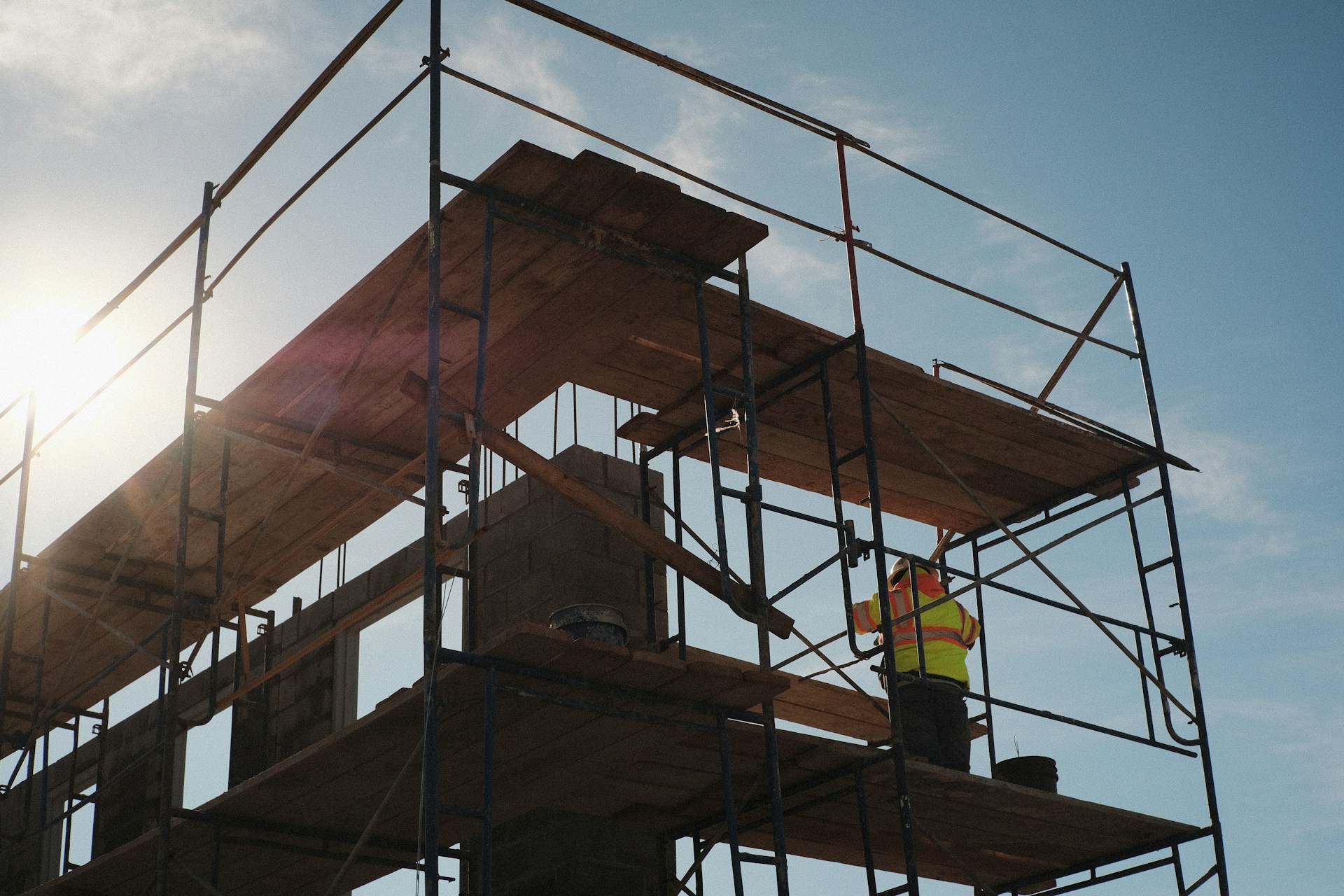
The scaffolding cost for a detached house is higher than for a semi or terrace — all four elevations are exposed, and that means more material, more labour, and bigger price swings.
Unlike a semi-detached or terraced property, a detached house shares no walls with its neighbours. Every external face — front, rear, and both gable ends — may require access scaffolding depending on the scope of work, which is why both the total cost and the variation between quotes can be substantial.
Why Scaffolding for a Detached House Costs More
A full scaffold around a detached property can involve two to three times more material than a simple front-only lift on a terrace. More tubes, boards, couplers, and fittings mean higher material costs; more time on site for erection and dismantling means higher labour costs. Both feed directly into the price.
Larger detached homes — particularly four or five-bedroom properties with double-height rear extensions or complex roof lines — sit at the top of any cost range. Smaller two-bedroom detached bungalows cost considerably less, but they still typically need scaffolding on multiple faces for structural or roof work.
Typical Scaffolding Costs for a Detached House
The scaffolding cost for a detached house varies considerably based on property size, the number of elevations involved, and the nature of the work. The table below gives a realistic indication of what different jobs typically require.
| Type of work | Scaffold coverage | Typical price range |
|---|---|---|
| Chimney repair or repointing | Chimney stack or single elevation | £500–£1,200 |
| Roof repair or partial reroofing | One or two elevations | £1,200–£2,500 |
| Full reroofing | Full roof perimeter | £2,000–£4,500 |
| External repainting (all sides) | All four elevations | £2,000–£5,000 |
| Render removal and recoating | All four elevations | £2,500–£6,500 |
| New extension build | Two to three elevations | £1,200–£3,500 |
| Full external renovation | All four elevations | £3,000–£9,000+ |
These are guide ranges based on typical UK jobs. The actual detached house scaffolding price depends on your property's size, layout, and access requirements. To get a figure closer to your situation, estimate your scaffolding cost using the free ScaffSource calculator before approaching contractors.
When Partial Scaffolding Works on a Detached House
Not every job requires a full four-elevation scaffold. For many repairs, scaffolding on one or two sides is perfectly adequate — and considerably cheaper.
Chimney and stack work
If the work is limited to a chimney stack or a specific gable end, a contractor can often erect scaffolding on that face only. A single-elevation lift for a chimney stack repoint will cost significantly less than a full perimeter scaffold, and the hire period is likely to be shorter too.
Localised repairs
A blown soffit or damaged fascia on one side of the property, failed pointing on a single wall, or a small section of missing slates — these typically justify partial scaffolding rather than full coverage. Ask your contractor directly whether the job can be done safely with access on fewer elevations.
When a full perimeter scaffold is necessary
A full scaffold around all four sides is usually required for:
- Complete reroofing across all slopes
- External rendering that wraps around the entire property
- Whole-house external painting or limewashing
- Structural work where materials need to move around the full footprint
Staging these jobs in phases — scaffolding one elevation at a time — is rarely cost-effective, because each erection and dismantling visit carries a mobilisation charge that quickly erodes any apparent saving.
Why Detached House Scaffolding Quotes Vary So Much
Of all property types, detached houses produce the widest spread of quotes. A difference of £1,000 or more between contractors on identical work is not unusual. Several factors explain this.
Site access and constraints
A detached house usually has space on all four sides — but that does not always mean easy access. A rear garden with a gate too narrow to wheel equipment through, soft or uneven ground requiring extra base plates and spreader boards, or a large tree close to the wall can all add time and cost. Some contractors price these risks into their quote; others do not, and the bill reflects it later.
Roof shape and complexity
A simple pitched roof over a rectangular footprint is quick to scaffold. A house with a hip roof, a rear dormer, multiple building levels, or a conservatory abutting the back elevation requires a more complex design that takes longer to plan and erect. The same floor area can involve very different amounts of scaffolding depending on the roof geometry.
Height and number of storeys
A detached bungalow and a three-storey detached house are in entirely different cost brackets, even with the same footprint. Each additional storey adds material and increases the structural complexity of the scaffold. A bungalow requiring access to the eaves sits at the lower end of the detached house scaffolding price range; a full three-storey property with a complex roof sits at the top.
Regional pricing differences
Scaffolding labour rates are noticeably higher in London and the South East than in the Midlands, the North, Scotland, or Wales. A full perimeter scaffold that costs £3,500 in Leeds or Manchester could cost £5,500 or more in parts of London — the structure and materials are identical, but the day rate is not.
What Else Can Push the Cost Up
Beyond size, storey count, and location, these factors frequently add to the overall scaffolding cost for a detached house:
- Restricted side access — a narrow side return forces scaffolding materials to be hand-carried rather than wheeled, which takes longer and costs more
- Highway licence — if the scaffold needs to overhang or occupy the pavement at the front of the property, a licence from the local council is required, adding cost and sometimes significant lead time
- Debris netting or sheeting — required for render removal and some roofing work, particularly near public footpaths; this adds to material costs and can affect wind loading on the structure
- Fully boarded platforms — some contractors quote for minimal decking and charge extra for fully boarded working platforms on every lift; check what is included in any quote you receive
- Extended hire periods — most quotes include a set hire period of two to four weeks; each additional week beyond that incurs hire charges that accumulate quickly on large scaffolds
How Long Will the Scaffold Be Up?
Duration matters because most scaffolding quotes separate the price into three parts: erection, weekly hire, and dismantling. The erection and dismantling charges are fixed; the hire charge runs until the scaffold comes down.
If multiple trades are working on your detached house in sequence — roofer first, then plasterer, then painter — the scaffold may need to stay in place for two or three months. Planning the sequence of trades before the scaffold goes up, and agreeing a realistic programme with the contractor, avoids unexpected additional hire costs.
Ask any contractor you approach to break the cost down into separate line items: erection, weekly hire rate, and dismantling. That way, if the job overruns by two weeks, you know exactly what it will cost before it happens.
Getting Accurate Quotes for Scaffolding for a Detached House
Gather at least three quotes from NASC-registered scaffolding contractors and give each one exactly the same brief: the postcode, number of storeys, which elevations need covering, the nature of the work, and the expected duration. Inconsistent information produces inconsistent quotes, which makes meaningful comparison impossible.
Be wary of quotes that come in significantly lower than the others. Scaffolding is a safety-critical trade regulated under the Working at Height Regulations 2005, and a dramatically low price often reflects reduced material specification, a less thorough design, or fewer inspections during the hire period.
Before approaching contractors, get an instant price for your job with the ScaffSource calculator — it gives you a realistic baseline so you can assess whether quotes are in the right range.
The Short Version
The scaffolding cost for a detached house is higher than for most other property types because all four elevations may need covering — costs range from under £1,000 for a single chimney stack to £9,000 or more for a full external renovation on a large three-storey property.
- Partial scaffolding works well for localised repairs and is considerably cheaper than a full perimeter scaffold
- Full coverage is needed for reroofing, whole-house rendering, and complete external renovation
- Site access, roof complexity, storey count, regional pricing, and hire duration all drive significant cost variation
- Get at least three like-for-like quotes from NASC-registered contractors and compare them against a realistic baseline
For more pricing guides by job type and property, take a look at the ScaffSource blog.