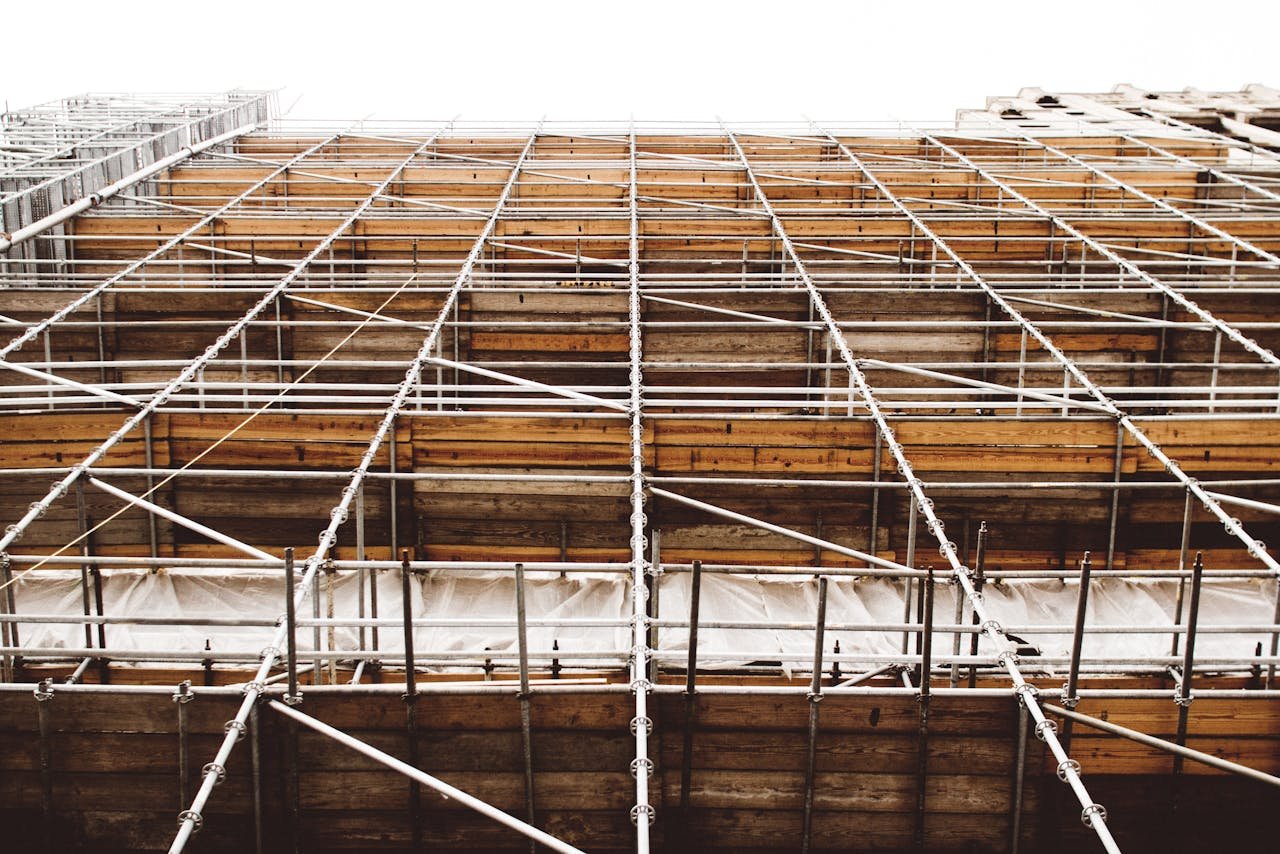
For many UK homes, scaffolding for a painting job costs as much as the decorating itself — sometimes more. If you have been searching for scaffolding for painting near me and ended up with quotes in the hundreds or low thousands, you have not been overcharged; that is simply what safe, legal access to a multi-storey UK home costs.
The painting scaffolding price surprises a lot of homeowners, who naturally start looking for alternatives: ladders, a hired tower, or a cherry picker. All of those can work in the right circumstances. But each comes with trade-offs in cost, safety, and practicality that are worth thinking through before you commit to anything.
What Does Scaffolding Cost for a Painting Job?
The scaffolding cost for painting a house varies mainly by property size, the number of sides being painted, access difficulty, and how long the scaffold needs to stay up. A straightforward terrace with front-only street access is the simplest and cheapest scenario. A detached with a restricted rear garden, a sloped plot, or a chimney stack to reach is a different matter entirely.
As a rough guide for erected-and-dismantled scaffold including a two-to-three week hire period:
| Property type | Sides painted | Typical scaffolding cost |
|---|---|---|
| Two-storey terrace | Front only | £600–£900 |
| Two-storey semi-detached | Front and side | £800–£1,200 |
| Two-storey detached | All four sides | £1,500–£2,500 |
| Three-storey townhouse | Front only | £1,000–£1,600 |
| Bungalow | All round | £400–£700 |
These are estimates for reasonable access, no pavement licence, and a standard hire period. Every variable — height, ground conditions, urban location, council licence requirements — can move the price. You can estimate your scaffolding cost for your specific property using the free tool on this site.
Scaffolding vs Ladders vs Cherry Picker — Which Is Right?
Each access method has a place. The wrong choice can mean slower work, a worse finish, or a safety incident. Here is how they compare for a typical exterior painting job on a UK home.
| Access method | Typical cost for a painting job | Best suited for | Watch out for |
|---|---|---|---|
| Scaffolding | £600–£2,500+ | Most exterior painting, multi-storey properties, longer hire periods | Upfront cost; council licence needed if scaffold goes over a public pavement |
| Ladders (professional use) | No extra hire cost | Single-storey, small areas, spot repairs | Tiring; slower; requires a proper risk assessment under Working at Height Regulations 2005 |
| Scaffold tower (hired) | £50–£120 per week | Two-storey front facades, confined spaces | Not suitable for sloped or uneven ground; limited reach |
| Cherry picker (MEWP) | £250–£500 per day | High or awkward spots, one-off access needs | Requires firm, level ground and access for a delivery lorry |
Ladder-only exterior painting has become less common among professional decorators. Ladders are not banned — but the HSE's Working at Height Regulations 2005 require that work at height is properly planned and that the most suitable practicable access method is used. On a two-storey or taller building, a scaffold usually wins that assessment. It lets two or three people work at the same time, reduces fatigue, and means a decorator can return the following day without resetting everything from scratch.
When Scaffolding Is the Right Call
There are situations where scaffold is not just the safest option but also the most practical — and often the cheapest when you look at the full picture.
Multi-storey and large properties
On a three-storey townhouse or a large detached, a cherry picker costs nearly as much per day as scaffolding does for three weeks. For anything requiring more than a day's access, erected scaffold almost always works out cheaper and gives the decorator the flexibility to return between coats without extra cost.
Chimney stacks and gable ends
A chimney stack or a gable end above a steeply pitched roof is not safely accessible with a ladder alone — and it is also outside the practical reach of most hired scaffold towers. Full tube-and-fitting scaffold, sometimes with a birdcage platform, is the only reliable way to give a decorator safe, stable access for the time needed to prepare and paint properly.
Full exterior repaints
If you are having render, masonry, timber cladding, or soffits and fascias painted across the whole house, the preparation work alone — washing down, treating moss, filling cracks, priming — justifies a stable working platform. Doing all of this from a ladder takes significantly longer and makes it much harder to maintain a consistent finish across large elevations.
When the decorator requires it
Many established painting contractors will not take on certain jobs without proper scaffold in place. Their insurance, their risk assessment, and their legal duty under the Working at Height Regulations 2005 all point in the same direction. If a decorator tells you they need a scaffold, take that seriously — it is not an upsell, it is a legal and safety position.
What Pushes the Painting Scaffolding Price Up or Down?
The scaffolding cost for painting a house is not a flat rate. These are the main factors that move the price.
- Height and number of storeys. More lifts mean more poles, boards, and erection time.
- Sides covered. Front-only access is cheaper than wrapping scaffold around the full building.
- Access difficulty. Narrow side passages, sloped ground, or a rear garden with no gate all add time and cost.
- Pavement licence. If scaffold needs to overhang or stand on a public footway, your local council requires a licence. This typically costs £50–£250 and can add a week or two to lead times in busy areas.
- Hire period. Most scaffolders quote for a two-to-four week period. Extensions cost extra — usually £50–£150 per additional week depending on the size of the rig.
- Region. London and the South East typically run 20–40% higher than the Midlands and the North. Remote areas of Scotland, Wales, or Northern Ireland can attract a travel surcharge.
How Long Will You Need the Scaffold Up?
One of the most common ways homeowners end up paying more than expected is underestimating how long the scaffold needs to remain erected.
Exterior painting depends heavily on the weather. Masonry paint needs dry, mild conditions — ideally above 5°C with no rain forecast for at least 24 hours after each coat. In the UK, that can mean waiting several days between coats, particularly in spring or autumn. Idle scaffold still costs money, and extending a hire at short notice can be expensive if your scaffolding company is fully booked.
Plan around these factors when booking:
- Surface preparation time — washing down, treating moss, applying primer to bare or new render
- Drying time between coats (typically 4–6 hours minimum; longer in cool or humid conditions)
- Number of coats specified (most masonry paints require at least two)
- The UK weather window in the season you are planning to paint
For a two-storey full exterior repaint, allow a minimum of two weeks on the scaffold. Three weeks is safer if the season is unpredictable. Booking a longer period upfront is almost always cheaper than extending at short notice.
Finding Scaffolding for Painting Near Me
A search for scaffolding for painting near me will return a mix of scaffolding contractors and painting firms who include access in their own quote. Both approaches can work, but it is worth being clear about who is responsible for what before any work starts.
If your painting contractor is organising the scaffold, ask them which company is providing it. A reputable scaffolding firm should be a member of the NASC (National Access and Scaffolding Confederation), and their operatives should hold CISRS cards. The scaffold must be erected, altered, and dismantled by competent people — this is a legal requirement, not a preference.
Getting a separate scaffold quote alongside your decorating quote lets you compare the costs clearly and means you are not locked in if you need to change your decorator. There are more pricing guides and access advice articles on the ScaffSource blog if you are weighing up other types of scaffolding work.
Once you have a clear picture of your property and the scope of the painting, you can get an instant price for your job to cross-check any quotes you receive against a realistic baseline.
The Short Version
- Scaffolding for a two-storey exterior paint job typically costs £600–£2,500, depending on property size, sides covered, and region.
- Cherry pickers suit one-off or awkward-access spots but become expensive compared to scaffold for multi-day jobs.
- Most professional decorators prefer a proper scaffold for anything above single storey — and their insurers do too.
- UK weather can extend the job unexpectedly; allow more hire time than you think you need, and book it upfront.
- Chimney stacks, gable ends, and full four-side exterior repaints almost always justify scaffolding on safety and quality grounds alone.
- Confirm that any scaffolding contractor is NASC-registered and that operatives hold CISRS cards before work starts.