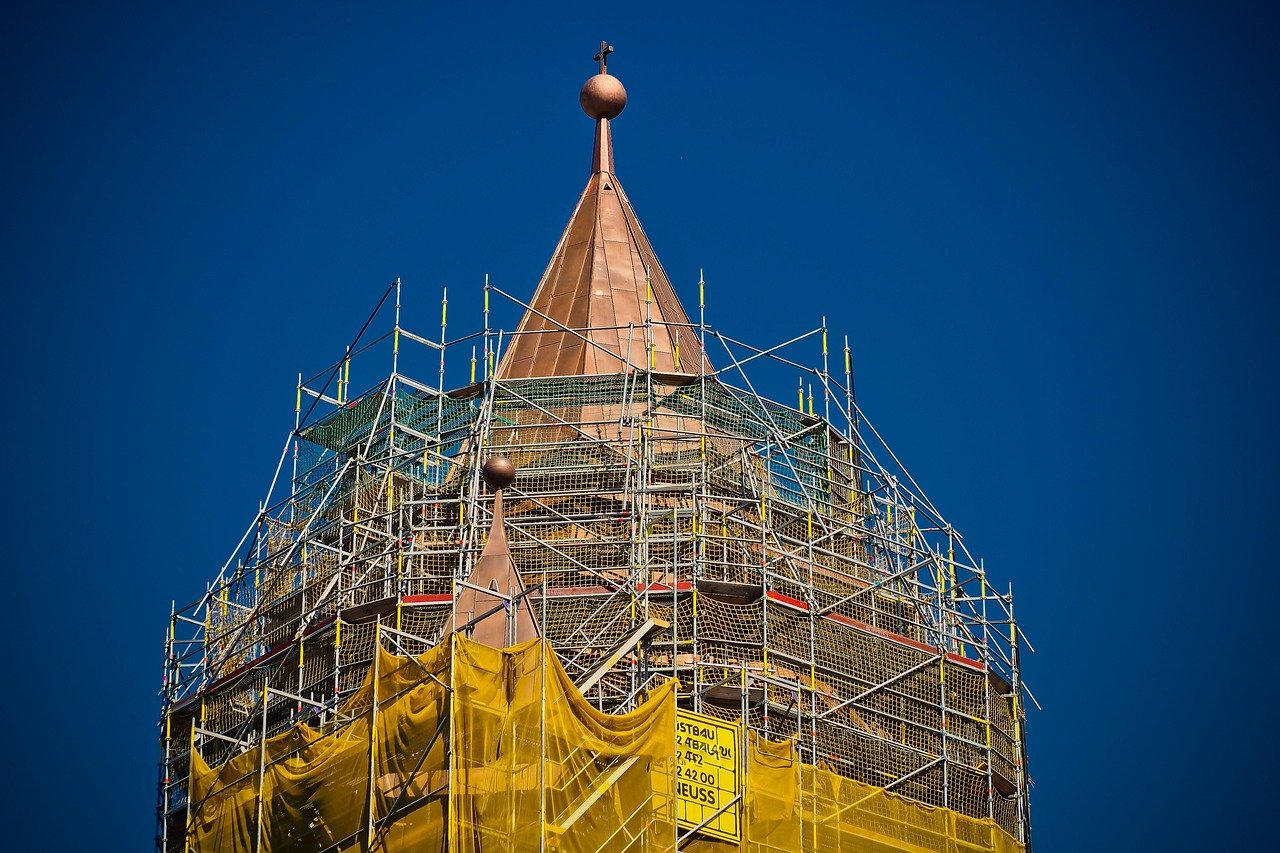
For most gutter repairs, a ladder is enough. But for gutter replacement and fascia work, scaffolding for gutters is the safer and usually the only practical solution — especially on two-storey properties.
When does gutter work actually need scaffolding?
The short answer: cleaning rarely does, replacement usually does.
A competent tradesperson can clear debris from single-storey gutters using a ladder. But the moment work becomes structural — swapping out guttering sections, renewing fascia boards, replacing soffits — the task changes. You're not just reaching up briefly; you're working at height for sustained periods, often carrying materials, using both hands, and moving laterally along the roofline. That's exactly the scenario the Working at Height Regulations 2005 exist to address.
For two-storey properties, scaffolding for gutters is almost always the right call. The eaves of a typical semi-detached or terraced house sit somewhere between five and seven metres off the ground — well beyond the safe reach of a domestic ladder, and far too high to work comfortably or safely without a proper platform.
What affects the cost of scaffolding for gutters?
Scaffolding costs aren't arbitrary. They reflect real variables about your property and the nature of the work involved.
Property height and layout
A single-storey extension is a very different job from a full three-storey Victorian terrace. Each additional level adds tube, fittings, boards, and labour time. A bungalow eaves job might need only a modest lift; a tall gable end above a two-storey bay window is a considerably more involved scaffold. The number of storeys is usually the single biggest driver of cost.
Length of guttering run
Guttering runs the full perimeter of the roofline, but you usually only scaffold the section being worked on. Replacing gutters on one elevation of a semi-detached house is very different from tackling all four sides of a detached property. The longer the run, the more material and set-up time involved — and the longer the scaffold will likely need to stay on hire.
Roof pitch and site access
A steeply pitched roof — common on older Victorian and Edwardian properties — can complicate scaffold design. The platform may need to stand further from the wall and use extended lifts to reach a safe working height. Difficult or confined access — a narrow side passage, a slope in the garden, proximity to a boundary wall — also adds to the overall cost. Some properties in dense terraced streets require the scaffolding company to obtain a highway licence from the council before erecting anything that overhangs the pavement, which is an additional step, though reputable firms handle this as part of the job.
Duration of hire
Most scaffolding quotes include a hire period, typically one to two weeks for straightforward gutter work. If your tradesperson is waiting on materials or the job is delayed by weather, you may pay extra for extended hire. Always confirm what's included in the quoted period before work starts.
Typical cost ranges for gutter replacement scaffolding
Prices vary across the UK, and no two jobs are exactly alike. The figures below are indicative ranges for common job types, not fixed quotes. For a more tailored estimate, you can estimate your scaffolding cost using the ScaffSource calculator before approaching contractors.
| Job type | Typical scaffold cost range | Typical hire period |
|---|---|---|
| Single-storey rear extension (one elevation) | £150–£350 | 1–2 weeks |
| Two-storey semi-detached (one elevation) | £350–£650 | 1–2 weeks |
| Two-storey detached (full perimeter) | £700–£1,400 | 2–3 weeks |
| Three-storey terrace (front and rear) | £900–£1,800 | 2–4 weeks |
| Fascia and soffit replacement (two-storey semi) | £500–£900 | 2–3 weeks |
London and the South East generally sit towards the upper end of these ranges. The North of England, Scotland, Wales, and Northern Ireland tend to come in lower. Urban areas with restricted access or congestion charges may attract additional fees.
Gutter replacement vs gutter cleaning — why the distinction matters
It bears repeating: cleaning and replacement are different jobs that often warrant different access solutions.
For a periodic clean — clearing leaves, moss, and debris — a qualified operative with the right ladder and standoff bracket can often work safely without scaffolding, provided the building isn't unusually tall. Some companies use vacuum systems or telescopic tools from ground level for routine cleaning.
Gutter replacement scaffolding is a different matter entirely. Swapping out sections of UPVC guttering means holding, cutting, and fitting components along the full length of the eaves. You need a stable, level platform to work from — not because of any arbitrary rule, but because it genuinely produces better results. A slightly misaligned fall on the gutter run (the angle that carries water towards the downpipe) is easy to miss when you're perched on a ladder and difficult to correct afterwards. A proper scaffold platform removes that problem.
Combining fascia and soffit work with gutter replacement
If your gutters need replacing, it's well worth asking a roofer or specialist to inspect the fascia boards at the same time. The fascia is the horizontal board that runs along the eaves, and it's what guttering brackets fix to. Rotted or failing fascia will undermine even brand-new guttering within a few seasons — so renewing them together makes practical sense.
Fascia scaffolding cost tends to be higher per job than gutters alone, simply because the scaffold needs to be in place longer and may need to cover more of the elevation. But combining both jobs in a single visit almost always saves money overall, since the scaffold is already going up and you're not paying for two separate erection and dismantling visits.
Ask your tradesperson for a combined quote. If they quote gutters and fascia separately, check whether the scaffold hire is being counted twice — it shouldn't be. Soffit boards (the horizontal panels visible from below the eaves, running between the fascia and the wall) are also worth inspecting at the same time. All three elements — guttering, fascia, soffit — are closely related and typically accessed in one scaffold operation.
Do you need permission for scaffolding on your home?
For most domestic gutter or fascia work, no planning permission is needed for the scaffold itself. If the structure needs to partially overhang a public pavement or footway, the scaffolding company will need to apply for a licence from the local council — sometimes called a highway licence or scaffold licence. This is the contractor's responsibility to arrange, not yours, and the cost is usually included in the quote.
If your home is in a conservation area or is a listed building, there may be additional requirements relating to the work itself, but these rarely affect the scaffold. Your local planning department can clarify if you're unsure.
What to look for when booking a scaffolding company
Not all scaffolding contractors are equal. For any gutter or fascia job, it's worth checking a few things before committing:
- NASC membership or equivalent accreditation — the National Access and Scaffolding Confederation audits members against industry standards for design and erection.
- Public liability insurance — ask for a copy before work starts. Standard minimum cover for domestic work is £5 million.
- Written quote — should detail the scope, hire period, and any conditions for extension.
- TG20 compliance — the industry guidance note covering standard tube-and-fitting scaffolding. Any reputable company will know it.
- CISRS-trained operatives — the Construction Industry Scaffolders Record Scheme confirms individual scaffolders have the right training and experience.
You can find more guidance on getting the best quotes and what to ask contractors in the pricing guides on the ScaffSource blog.
How long does scaffolding stay up for gutter work?
For a straightforward gutter replacement on a two-storey semi-detached house, expect the scaffold to be on site for one to three weeks. Erection typically takes half a day to a full day; dismantling takes similar time. The working period in between depends on the scope of the job and your contractors' availability.
If fascia and soffit boards are being replaced at the same time, budget for two to four weeks on site. It's worth letting your immediate neighbours know in advance, particularly if you're in a terrace where the scaffold may sit close to or adjacent to their property. A brief conversation before work starts avoids misunderstanding.
Getting a price before you commit
The ranges above give a useful starting point, but your actual scaffolding cost depends on your specific property — height, elevation length, site access, and where in the country you are. Before committing to a gutter or fascia replacement project, see what your project should cost with the ScaffSource calculator, then compare that figure against the quotes you receive from contractors.
A large gap between the estimate and a contractor's quote is worth exploring. It might mean the job is more complex than expected, or that the quote includes unnecessary scaffold. Either way, it's the right question to ask.
The short version
- Gutter cleaning rarely needs scaffolding; gutter replacement almost always does on two-storey properties.
- Fascia and soffit work is worth combining with gutter replacement — one scaffold visit is cheaper than two.
- Scaffold costs vary by property height, elevation length, site access, and region. A two-storey semi typically falls in the £350–£900 range depending on scope.
- Check NASC membership, public liability insurance, and get a written quote before booking.
- If the scaffold overhangs a public pavement, the company arranges the council licence — not you.