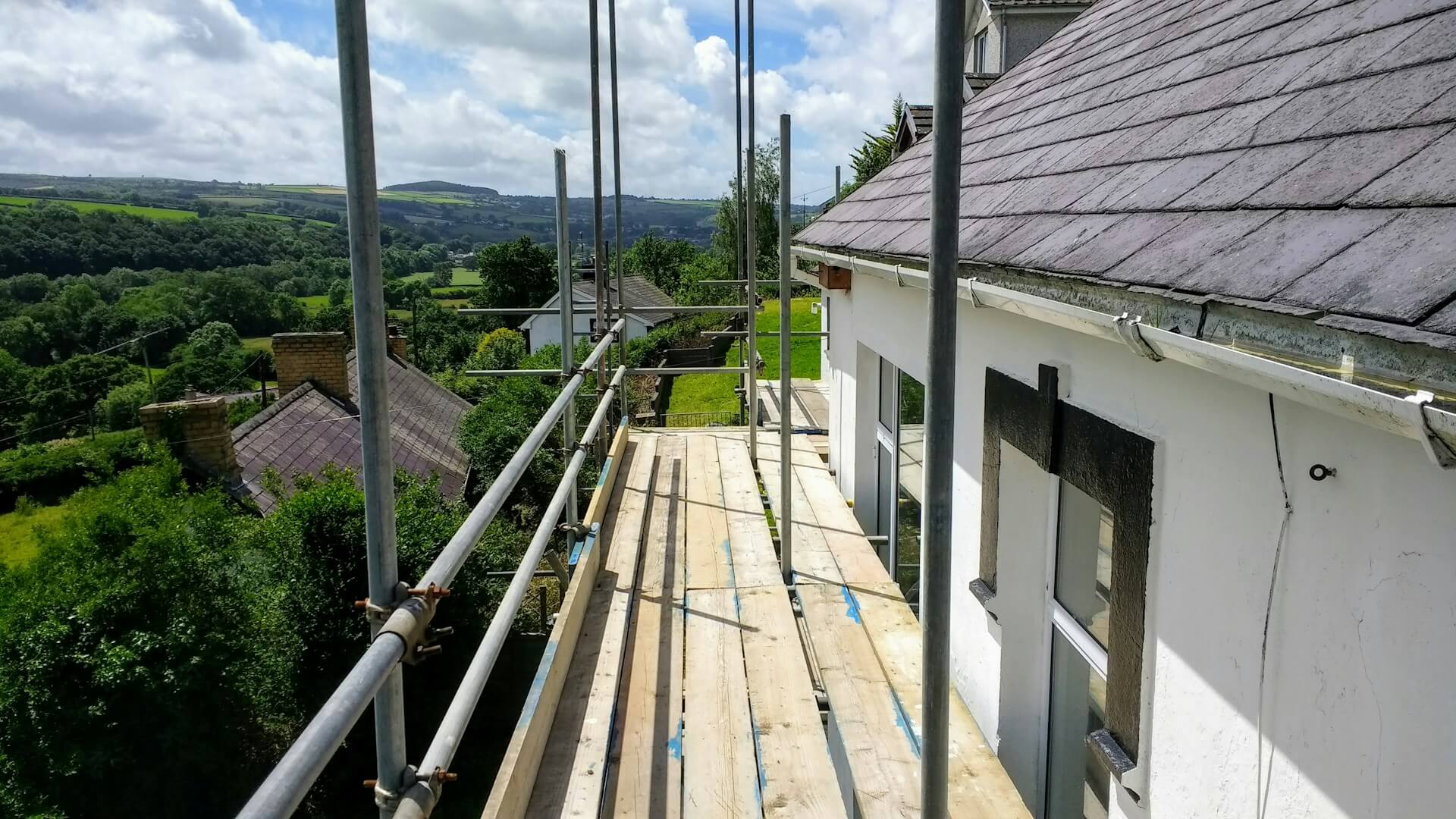
Scaffolding hire sits in the background of almost every serious home improvement project in the UK, including roof replacements, loft conversions, rendering, chimney repairs, and solar panel installations. Yet for most homeowners, the cost of scaffolding remains a mystery until a quote lands in their inbox.
This guide exists to change that. Whether you're a homeowner trying to budget accurately, a contractor pricing up a job, or a project manager procuring scaffolding for the first time, you'll find clear, current price ranges here, broken down by property type, job type, hire duration, and UK region.
Key finding: Scaffolding hire for a standard 2-storey semi-detached house costs between £700 and £1,100 per month (4-week period) in 2026, covering three sides. Prices vary significantly by location, access, and project complexity.
What Affects the Cost of Scaffolding Hire?
Before getting into the numbers, it's worth understanding the variables that drive scaffolding costs up or down. A quote isn't arbitrary. Every figure reflects real decisions about materials, labour, access and risk.
1. Property size and number of sides
The most significant cost driver is how much of your property needs scaffolding access. A single-side scaffold on a terraced house is a completely different proposition from a full four-sided wrap around a detached property. More sides means more poles, more boards, more couplers, and more hours to erect and dismantle.
2. Height and number of lifts
A 'lift' is a boarded working platform at a given height. A standard guttering job on a two-storey house typically needs one lift. Rendering an entire three-storey elevation might need two or three. Each additional lift adds materials and labour, and height introduces additional safety requirements that scaffolders must account for.
3. Hire duration
Most scaffolding companies quote based on a standard 4-week hire period. Projects that run longer incur weekly continuation charges, typically 2 to 10% of the original quote per week. The size and complexity of the job usually determines whether scaffolding is quoted weekly or on a fixed-period basis.
4. Access and site conditions
If getting scaffolding materials to your property is straightforward, costs stay near the lower end of any range. Difficult access pushes costs up: narrow ginnels, long walks from the nearest road, sloped ground, or restricted working hours all add time and therefore money.
5. Pavement licences and permits
If scaffolding will encroach onto a public pavement, footpath, or road, a licence from the local council is legally required. Your scaffolding company will usually apply on your behalf, but the cost is passed to you, typically around £140 per month. In London and some other urban areas, costs can be higher and timeframes for approval longer.
6. Location within the UK
London and the South East command a consistent price premium over the rest of the country, typically 15 to 25% above the national average, due to higher labour rates, logistics costs, and congestion-related overheads. The North, Scotland and Wales tend to sit below the national average by a similar margin.
7. Special requirements
Bridging over a conservatory, working on a slope, installing a temporary roof structure, or erecting scaffolding outside of normal working hours all introduce specialist requirements that push the final figure up. These scenarios are covered in their own sections below.
Scaffolding Hire Cost by Property Type
The table below gives 2026 guide prices for standard scaffolding hire by property type in the UK. These figures assume typical access conditions, a standard hire duration, and exclude optional extras like sheeting or scaffold alarms. All prices are for the initial 4-week hire period.
| Property Type | Sides Required | Monthly Cost (4 weeks) | Typical Duration |
|---|---|---|---|
| Terraced house (2-storey) | 2 (front and rear) | £650 to £950 | 4 to 6 weeks |
| Semi-detached (2-storey) | 3 | £700 to £1,100 | 4 to 8 weeks |
| Detached house (2-storey) | 4 (all sides) | £1,000 to £1,500 | 4 to 8 weeks |
| Bungalow (full wrap) | 4 (all sides) | £800 to £1,200 | 4 to 6 weeks |
| 3-storey semi | 3 | £900 to £1,400 | 6 to 10 weeks |
| Flat / apartment block | Varies | £1,200 to £3,000+ | Project-dependent |
Prices compiled from live 2026 pricing guides published by UK scaffolding companies and trade cost-comparison platforms. Individual quotes will vary based on location, access and project-specific requirements.
Scaffolding Hire Cost by Number of Sides
If your job only requires access to part of your property, single or double-side scaffolding is often significantly cheaper. Here is a breakdown of single-side costs by property height and number of lifts required.
| Job Type (one side) | Low Estimate | High Estimate | Notes |
|---|---|---|---|
| Bungalow, 1 lift | £250 | £450 | Gutters, fascias |
| 2-storey, 1 lift | £350 | £650 | Standard access |
| 2-storey, 2 lifts | £500 | £900 | Rendering, pointing |
| 3-storey, 1 lift | £800 | £1,200 | Roof access |
| 3-storey, 2 lifts | £1,100 | £1,800 | Full elevation work |
A 'lift' is a boarded working platform at a given height. A single-storey guttering repair may need just one lift; rendering or painting work on a tall elevation often requires two.
Scaffolding Cost by Job Type
Different home improvement projects create different scaffolding requirements. The same property can cost very different amounts to scaffold depending on whether you're replacing a roof, installing solar panels, or doing a full external render. The table below covers the most common job types.
| Job Type | Typical Cost | Duration | Scaffold Type |
|---|---|---|---|
| Roof replacement (terrace) | £800 to £1,200 | 4 to 6 weeks | 3-sided, 1 lift |
| Roof replacement (semi) | £900 to £1,400 | 4 to 8 weeks | 3-sided, 1 lift |
| Render / repoint (full house) | £1,500 to £2,600 | 6 to 10 weeks | Full wrap, 2 lifts |
| Loft conversion | £1,200 to £2,000 | 8 to 16 weeks | Wrap with loading bay |
| Solar panel installation | £400 to £700 | 1 to 2 weeks | 1 to 2 lifts, rear only |
| Guttering / fascias | £250 to £600 | 1 to 3 weeks | Tower or 1 lift |
| Chimney repair | £325 to £900 | 1 to 4 weeks | Chimney scaffold |
| External painting | £1,000 to £2,000 | 4 to 8 weeks | Full wrap, 1 to 2 lifts |
| Temporary roof (tin hat) | £4,000 to £6,000 | Project duration | Full wrap with roof structure |
What is a temporary roof scaffold? A temporary roof (also called a tin hat) is the most expensive category in residential scaffolding. It involves erecting a full weatherproof structure over the existing roof to allow work during adverse conditions, essential for major roof replacements or loft conversions on exposed properties.
How Scaffolding Is Priced: Day, Week or Month?
Understanding how scaffolding companies charge is essential for budgeting accurately. There is no single pricing model. It varies by company, project size, and hire duration.
The 4-week standard
The industry norm in the UK is a fixed 4-week hire period included in the upfront quote. This covers erection, the hire period, weekly safety inspections, and dismantling. It is not four separate weekly charges. It is a project price that covers a standard build cycle.
Weekly continuation charges
If your project overruns, which is common in construction, you will usually be charged a weekly continuation fee. This is typically 2 to 10% of the original quote per week, depending on the size and complexity of the scaffold. On a £1,000 scaffold, this equates to £20 to £100 per extra week. Always confirm this rate before signing a hire agreement.
Daily rates
True daily rates are rare for erected scaffolding. Most companies will not price per day because the erection and dismantling cost alone outweighs the value of a single day's hire. As a rough guide, the daily equivalent of a weekly rate runs at approximately 15 to 30% of that weekly figure. Scaffold tower hire (DIY assembly) is more commonly available on shorter terms.
| Scaffold Size | Weekly Rate | Monthly Rate (4 weeks) | Daily Equivalent |
|---|---|---|---|
| Small tower (up to 5m) | £200 to £350 | £800 to £1,400 | £30 to £65 |
| 1-side, 2-storey | £250 to £420 | £950 to £1,650 | £40 to £80 |
| Semi-detached (3-sided) | £350 to £550 | £1,300 to £2,200 | £55 to £105 |
| Detached (4-sided) | £500 to £750 | £1,900 to £3,000 | £80 to £140 |
| 3-storey / complex | £700 to £1,100 | £2,700 to £4,400 | £120 to £200 |
Regional Scaffolding Costs Across the UK
Geography has a measurable impact on scaffolding hire prices. The table below shows how prices compare to the national average across different UK regions, using a standard 2-storey semi-detached house as the benchmark.
| Region | Price vs. UK Average | Example: Semi-Detached (Monthly) |
|---|---|---|
| London and Greater London | 15 to 25% above average | £850 to £1,375 |
| South East | 10 to 15% above average | £770 to £1,265 |
| Midlands and East | Broadly average | £700 to £1,100 |
| North West and Yorkshire | 5 to 15% below average | £595 to £935 |
| Scotland | 10 to 20% below average | £560 to £880 |
| Wales and South West | 5 to 10% below average | £630 to £990 |
London prices are most affected by congestion charges on scaffolding lorries, parking suspension costs, pavement licence fees, and a structurally higher cost base for skilled labour. In cities where access is restricted, out-of-hours erection may also be required, adding a further surcharge.
Additional Costs to Watch Out For
A scaffolding quote often does not represent the total you will pay. Understanding what is and is not included upfront can prevent significant budget surprises mid-project.
| Included in Most Quotes | Often Charged as Extras |
|---|---|
| Erection and dismantling labour | Pavement / highway licence (approx. £140/month) |
| All poles, boards, couplers and ties | Extended hire beyond 4 weeks (2 to 10% of original quote per week) |
| Standard 4-week hire period | Scaffold alarm |
| Weekly safety inspections | Sheeting, netting or debris protection |
| Delivery to site | Bridge over conservatory (typically £400 to £900 extra) |
| Out-of-hours erection surcharge |
Before accepting any quote, confirm: whether erection and dismantling are included, what the weekly continuation rate is, and whether any pavement or highway licences are required for your specific site.
Scaffold Tower Hire vs. Erected Scaffolding: Which Do You Need?
Not every job requires a full erected scaffold. Understanding the difference between hired scaffold towers and professionally erected scaffolding can save significant money on smaller jobs.
Scaffold towers (DIY hire)
Aluminium or fibreglass scaffold towers are available for self-hire from tool hire companies. They are suitable for small, low-level jobs where a stable work platform is needed but the scale does not justify full scaffolding. An aluminium tower costs approximately £33 to £150 per week depending on height, and a fibreglass (GRP) tower costs £67 to £193 per week.
Best for: guttering repairs, painting low elevations, small fascia work, internal ceiling work.
Not suitable for: multi-storey access, work spanning long elevations, jobs requiring heavy materials to be lifted.
Key requirement: the person erecting and using the tower must be competent. PASMA training is recommended.
Erected scaffolding (professional installation)
For anything above single-storey, spanning multiple elevations, or where materials need to be loaded from the scaffold, professionally erected scaffolding is both safer and more practical. All erected scaffolding must be installed and dismantled by trained scaffolders, and must be inspected before first use and every seven days thereafter.
Best for: roofing, rendering, full house painting, loft conversions, chimney work, solar panel installation.
Legal requirement: must comply with the Work at Height Regulations 2005.
Inspection requirement: must be inspected every 7 days and after any adverse weather event.
How to Get an Accurate Scaffolding Quote
The pricing in this guide is designed to help you set realistic budget expectations, not to replace a professional quote. Scaffolding costs are genuinely project-specific, and no two jobs are identical.
What to have ready before you call
- A description of the work being carried out (this determines the scaffold type and number of lifts)
- The approximate height of your property and the sides requiring access
- Whether scaffolding will need to cross a public footpath or road
- Your expected start date and project duration
- Photos of the property from the relevant elevations (most companies can quote accurately from photos alone)
How to compare quotes fairly
When you receive multiple quotes, ensure you are comparing like-for-like. The cheapest quote is not always the most cost-effective if it excludes the pavement licence, charges extra for dismantling, or does not include weekly inspections. Ask each company to itemise their quote using the same categories.
Checking credentials
All scaffolding companies should hold a minimum of £5 million in public liability insurance (£10 million is standard for pavement licences). Their scaffolders should hold a CISRS (Construction Industry Scaffolders Record Scheme) card. Do not hire a company that cannot demonstrate both.
Frequently Asked Questions
How long does scaffolding take to erect?
A basic scaffold tower takes 2 to 3 hours. Scaffolding on one or two sides of a standard two-storey house typically takes half a day with a two-person crew. A full four-sided wrap on a detached property can take a full day or more. Complex setups with temporary roofs or loading bays can take 2 to 3 days.
Do I need planning permission for scaffolding?
No. Scaffolding does not require planning permission. However, if it extends onto a public footpath, pavement or road, you do need a licence from your local council. Your scaffolding company should apply for this on your behalf. Budget approximately £140 per month for the licence fee.
Can my neighbour charge me for scaffolding on their property?
Under the Party Wall Act, if scaffolding needs to be erected on or across your neighbour's property, you must give written notice and, if they object, seek a formal agreement. In practice, most scaffolders can work from the public highway or your own land for standard residential jobs without needing access to adjacent property.
What is the minimum hire period for scaffolding?
Most companies set a minimum hire period of 4 to 6 weeks. Even short jobs are quoted on a 4-week basis because the cost of erection and dismantling is fixed regardless of how long the scaffold stands. Scaffold tower hire from tool hire companies is available on shorter terms, sometimes daily.
Is scaffolding included in my contractor's quote?
It depends on the contractor and the project. Roofing companies often include scaffolding in their overall quote; builders and plasterers may not. Always ask explicitly whether scaffolding is included, and if so, ask for it to be itemised. This lets you verify the hire duration and confirm who is responsible for licence applications.
How much does scaffolding cost per day?
There is no standard day rate for erected scaffolding in the UK. The 4-week hire model is the industry norm because erection and dismantling costs are fixed. As a rough indicator, the daily equivalent of a weekly rate is approximately 15 to 30% of that weekly figure, so a £400 per week scaffold would cost the equivalent of £60 to £120 per day if priced on a daily basis.
Summary: What You Should Expect to Pay
Scaffolding hire in the UK in 2026 typically ranges from £250 for a simple bungalow tower to over £3,000 per month for a full four-sided wrap on a larger property. The majority of standard residential jobs, including single-side repairs and roof work on terraced or semi-detached houses, fall within the £650 to £1,400 range for the initial 4-week hire period.