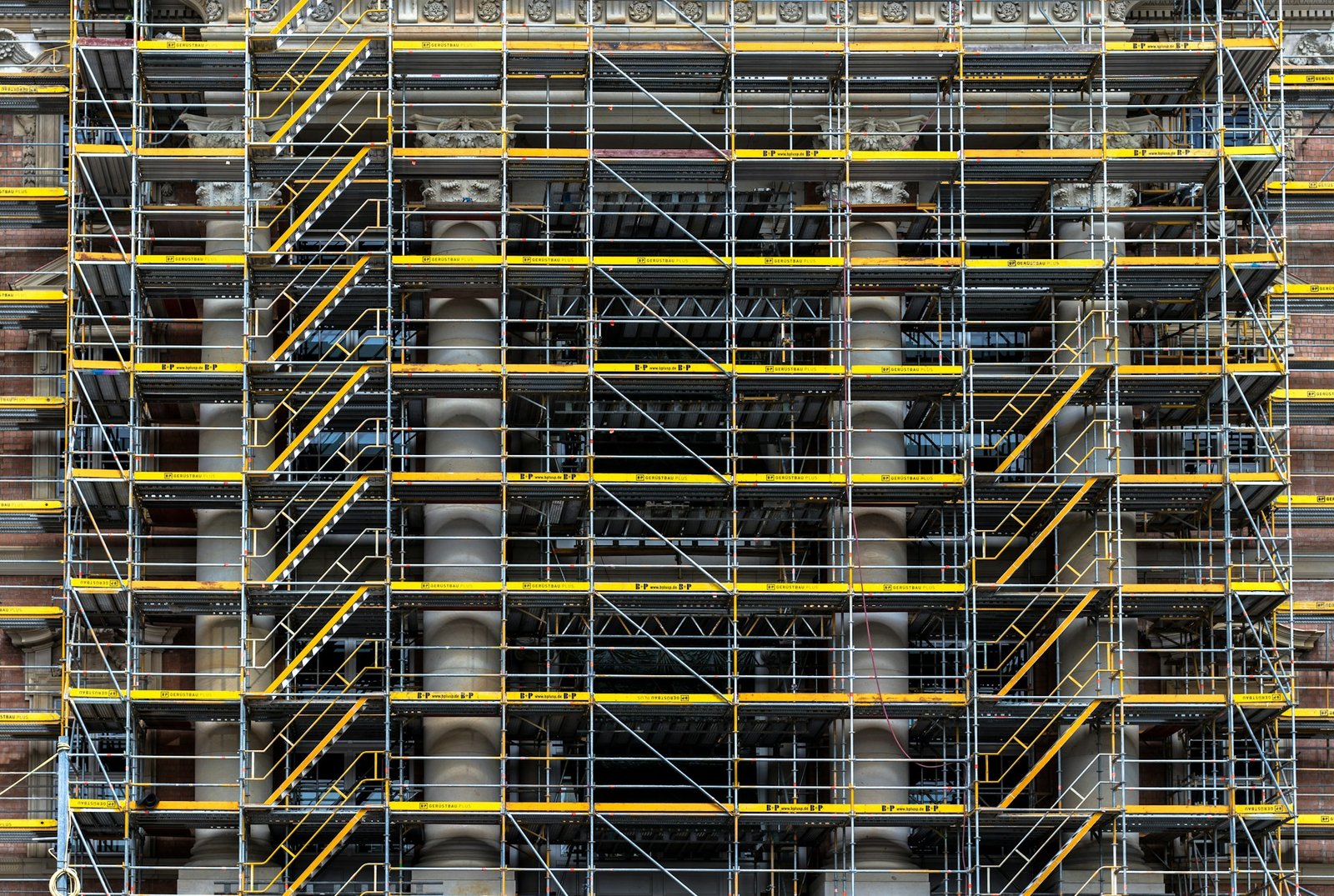
Scaffolding for a house extension typically stays on site for 8 to 16 weeks — one of the most underestimated costs in the whole build. If you're already searching for scaffolding for extensions near me, this guide covers each build phase that needs scaffold, how long the hire lasts, and what drives the cost.
Which Build Phases Actually Need Scaffolding?
Not every stage of an extension requires scaffold, but the phases that do are the most time-critical. Scaffold arriving too late — or coming down too soon — can stall every trade that follows it.
Structural steel installation
If your extension uses a structural steel frame — common in larger rear or side return builds — the steelwork may need scaffold from the outset. Erecting heavy steel sections safely at height requires a stable working platform. Your structural engineer's drawings will confirm whether this applies to your build.
Brickwork and blockwork
Once walls reach roughly 1.5 to 2 metres, bricklayers need access scaffold to work safely and at the right pace. For a single-storey extension this phase is relatively short — often just a few weeks. For a two-storey extension the scaffold stays up throughout as walls climb to full height.
Roof installation
This is where the requirements catch many homeowners out. Your roofers need safe, stable access to lay the structure, felt, and tiles. If the extension roof ties into the existing house roof, the scaffold will often need to reach ridge level — adding considerably to the height and complexity of the rig.
Finishing trades
Fascias, soffits, guttering, and any external render or cladding all need scaffold access. These finishing trades can stretch the hire period by several weeks. Confirm with your builder which trades are expected to use the scaffold — and when — so the hire period is costed realistically from the start.
Single-Storey vs Two-Storey Extension: What Changes?
Scaffolding for a two-storey extension is significantly more involved than for a single-storey build — not just taller, but more complex in structure, longer in duration, and higher in cost.
| Factor | Single-storey extension | Two-storey extension |
|---|---|---|
| Typical scaffold height | 3–5 metres | 6–9 metres |
| Typical hire duration | 8–12 weeks | 12–16 weeks (often more) |
| Roof tie-in to existing house? | Sometimes | Usually |
| Neighbour or boundary access issues? | Occasional | More common, especially terraces |
| Relative cost | Lower | Notably higher |
A wrap-around extension — where the new build spans both the rear and side of a property — can require scaffold on multiple elevations simultaneously, pushing complexity and cost higher still.
How Long Will the Scaffolding Stay Up?
Hire duration is one of the most variable elements of extension scaffolding. It depends on the size of the build, the number of trades working from the scaffold, and how closely the programme runs to plan.
Typical hire periods:
- Small single-storey extension (kitchen or dining room): 8–10 weeks
- Larger single-storey extension (full-width rear): 10–14 weeks
- Two-storey rear or side extension: 12–16 weeks as a starting point — build delays can push this to 20 weeks or more
- Side return with roof tie-in to main house: 10–14 weeks, depending on complexity
These figures assume reasonably straightforward site conditions. Awkward access, tight gardens, shared boundaries, or works to the existing roof will all extend the hire period. Build in at least two weeks of contingency when asking for quotes.
What Drives Extension Scaffolding Cost?
Extension scaffolding cost varies considerably depending on your specific site. Any quote you receive will reflect these factors rather than a flat rate.
- Footprint and perimeter: A larger extension needs more tube, fittings, and boards. A wrap-around or L-shaped build costs more than a simple rear addition of the same floor area.
- Height: Each additional lift — typically around 2 metres — adds materials and erection time. A two-storey extension costs substantially more to scaffold than a single-storey equivalent.
- Roof tie-in: If trades need to work at ridge level on the existing property, the scaffold must reach that height — often a significant addition to the quote.
- Site access: Tight side passages, sloped ground, or structures close to the boundary all complicate erection. A road or pavement licence from your local council adds both cost and lead time.
- Hire duration: Most contractors charge a weekly rate after the initial period. Longer builds mean higher overall costs — one more reason to agree build phases in writing before work starts.
- Location: Rates in London and the South East are typically higher than in the Midlands, the North of England, Scotland, or Wales. Regional supply and demand can differ markedly.
With so many variables, broad rules of thumb are unreliable here. Before approaching scaffolding contractors for quotes, you can estimate your scaffolding cost using the ScaffSource calculator — it takes your job type, dimensions, and postcode into account to give a realistic price range.
Scaffolding for Extensions Near Me: Finding the Right Contractor
When you look for scaffolding for extensions near me, you'll encounter a range of firms from large regional contractors to small local operators. Both can deliver quality work, but a few checks are worth making before you commit.
- NASC membership: The National Access and Scaffolding Confederation audits members against quality and safety criteria. It's a useful baseline when comparing contractors.
- TG20 compliance: TG20 is the industry guidance document for tube-and-fitting scaffold. A reputable contractor will be familiar with it and confirm compliance on request.
- CISRS cards: The Construction Industry Scaffolders Record Scheme certifies scaffolders. Ask whether the operatives erecting your scaffold hold current CISRS cards.
- Public liability insurance: Confirm the contractor carries adequate cover. For any domestic extension this is non-negotiable.
- HSE compliance: The Working at Height Regulations 2005 place legal duties on the contractor. A competent firm will be straightforward about how they meet them.
Always get at least three quotes. Prices can vary significantly for the same job — and a quote that looks low may not include all the lifts, boards, or ties your build actually needs.
Coordinating Scaffold With Your Builder
The most common source of scaffold cost overruns isn't the original quote — it's unplanned extensions to the hire period. A rig booked for 12 weeks that stays until week 18 adds real money in weekly hire charges.
- Book early. Scaffolders are often booked several weeks in advance. A delay waiting for a rig can stall your bricklayers and the entire programme.
- Agree responsibility in writing. Some builders include scaffolding in their overall package; others expect you to arrange it separately. Confirm this before any contracts are signed.
- Review the programme at week 8. By this point you'll know whether the original hire period is still realistic. Flag any overrun early so the contractor can manage the diary.
- Secure boundary and access permissions in advance. If your scaffold needs to stand on or oversail a neighbour's land — even briefly during erection — you'll need their written permission. Arrange this before work starts.
Getting a Price Before the Build Starts
The best time to get a scaffolding estimate for your extension is before you finalise your overall build budget — not after. Scaffolding is frequently treated as an afterthought and then comes as an unwelcome surprise when quotes arrive.
Have these details ready before approaching contractors:
- Planning permission drawings — these show footprint, height, and roof design clearly
- The number of storeys on both the extension and the existing property
- Your postcode, since rates vary considerably by region
- Your builder's expected programme — even a rough week-by-week breakdown is useful
With those to hand, you can get an instant price for your job on the ScaffSource calculator before you've had a single site visit. This gives you a realistic anchor figure when comparing quotes from local contractors — and helps you spot if any quote looks unusually high or low.
For guides covering other project types, including loft conversions, chimney stack repairs, and full house scaffold, browse the ScaffSource blog.
The Short Version
House extension scaffolding typically stays up for 8 to 16 weeks and covers three key phases: structural work and brickwork, roofing, and finishing trades. A two-storey extension costs more and needs a more complex rig than a single-storey build. The main cost drivers are footprint, height, roof tie-in requirements, site access, and hire duration.
Book scaffold before the build starts, confirm who manages the contractor in writing, and get a cost estimate early — before scaffolding becomes a surprise mid-project.