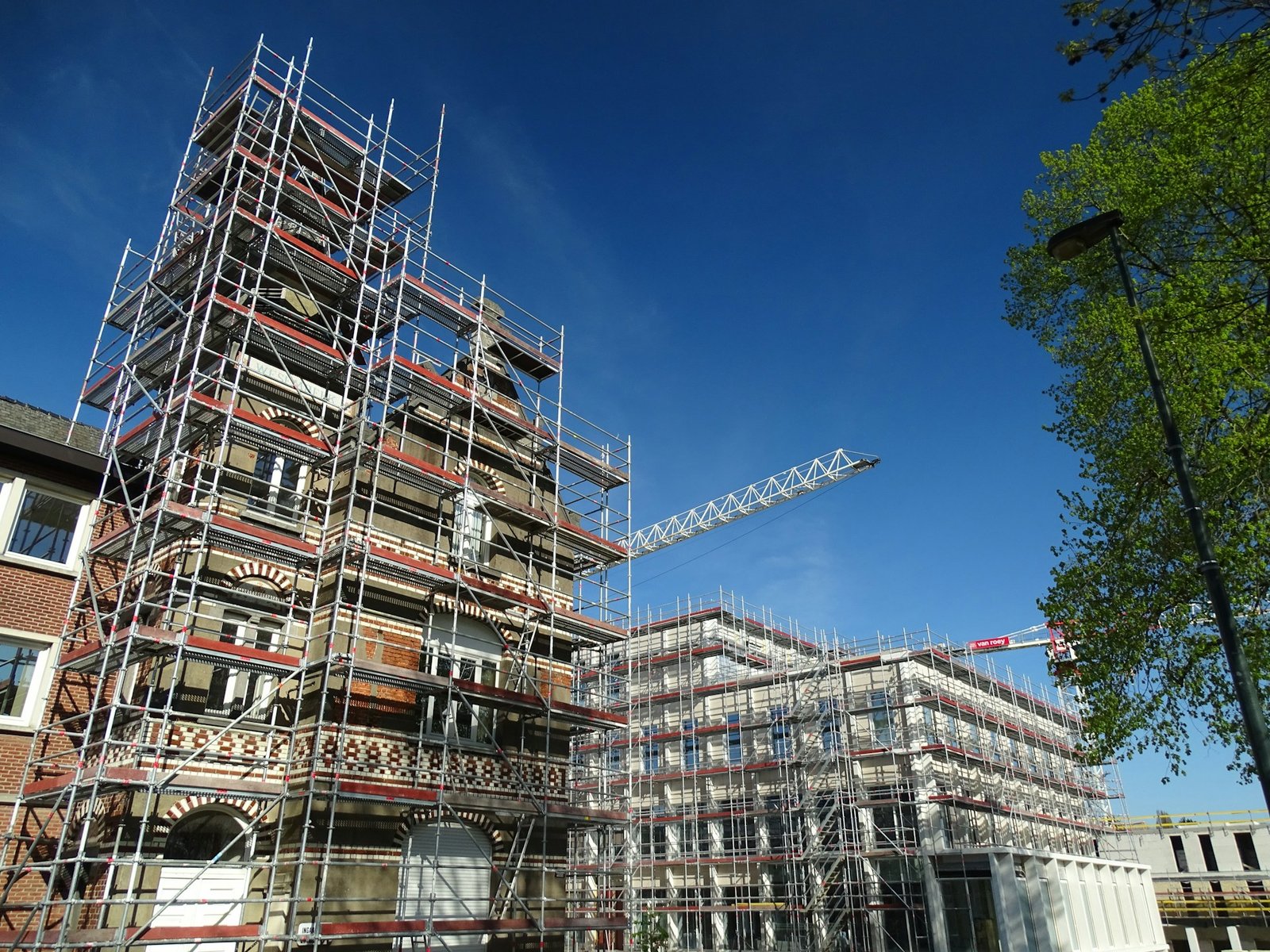
Scaffolding for a listed building isn't the same job as scaffolding an ordinary house. The protected status of the structure brings additional obligations — from photographic surveys before a single tube goes up, to protecting carved stonework from steel contact — and ignoring those obligations can result in enforcement action or, worse, irreversible damage to a historic building.
What makes listed buildings different?
In England and Wales, listed buildings are graded I, II*, or II based on their architectural or historic significance. Grade II accounts for the majority — around 92% of all listed buildings. In Scotland the categories are A, B, and C; in Northern Ireland, B+, B1, and B2. The exact grade doesn't change the principle: listed status means the building is legally protected, and any work that affects its character requires listed building consent from the local planning authority.
Historic properties — Victorian terraces, Georgian townhouses, medieval farmhouses, converted chapels — are disproportionately likely to have soft lime mortar, carved stonework, decorative metalwork, or glazing that was irreplaceable even when the building was new. Scaffolding contractors who usually work on modern brick and concrete need a different mindset entirely on a heritage site.
Does scaffolding require listed building consent?
This is one of the most common questions owners of listed buildings ask, and the honest answer is: it depends on how the scaffold is attached.
Temporary scaffolding that sits on the ground and makes no penetrations into the historic fabric generally does not require separate listed building consent. But scaffolding that needs to be tied into the building — through drilling, bolting, or chemical anchors — does affect the fabric, and may well require consent. Many conservation officers take the pragmatic view that scaffolding is necessary to enable consented repair work, and will consider the scaffolding as part of the overall application. The safest approach is to speak to your local planning authority's conservation officer before any contractor is booked.
If the underlying repair or maintenance work needs listed building consent — and it very often does, even for like-for-like repairs — raise the scaffolding method as part of that application. Get written confirmation of what is and isn't acceptable before work starts.
Additional measures for period property scaffolding
Scaffolding for a listed building or other period property typically involves several protective measures that aren't standard practice on modern buildings. A competent contractor should propose these without you having to ask.
Pre-erection photographic survey
Before any tubes are positioned, a detailed photographic survey should record the condition of the building's exterior: every crack, stain, loose stone, or damaged brick. This creates a baseline that proves what damage existed before the scaffold went up — and what didn't. If a dispute arises at the end of the job about a cracked corbel or a scratched window surround, you want photographic evidence from day one.
Tube padding and surface protection
Steel scaffold tubes are hard and heavy. Where they rest against or near historic masonry, carved details, timber, or decorative render, they must be padded with foam, rubber, or cloth sleeves to prevent contact damage. Toe boards and edge protection should be positioned so that falling materials don't strike the building fabric below.
No chemical anchors into historic masonry
Standard scaffolding on modern buildings often uses resin anchors drilled into brick or blockwork. On a listed building, drilling into original masonry — especially hand-carved stone or lime-pointed brickwork — is rarely acceptable. Contractors should design the scaffold to be free-standing where possible, or use reversible fixings through mortar joints rather than through the stone or brick itself.
Protection of specific features
Decorative terracotta panels, historic glazing, lead gutters, ornamental ironwork, and stone cornices all need individual consideration. A competent heritage scaffolding contractor will identify these features during a pre-site survey and propose protective wrapping or standoff distances accordingly.
Why scaffolding for listed buildings costs more
Several factors push the cost of listed building scaffold above what you'd pay for a comparable modern property of the same size. The table below summarises the main cost drivers — actual prices vary significantly by region, building size, and the complexity of the heritage requirements.
| Cost factor | Standard scaffold | Listed building scaffold |
|---|---|---|
| Pre-erection photographic survey | Not usually required | Standard requirement |
| Tube padding and surface protection | Minimal | Extensive — adds materials cost and time |
| Tie design (avoiding fabric penetration) | Drilled resin anchors | Free-standing or reversible ties — more complex design |
| Contractor expertise | General scaffolder | Heritage-experienced contractor — higher day rates |
| Erection time | Standard | Longer — more care required around historic features |
| Conservation officer liaison | Not required | May be required, adds planning time |
As a rough guide, expect to pay a meaningful premium — often 20–40% more than an equivalent standard scaffold — for a properly executed listed building job. The variables are significant enough that you should always estimate your scaffolding cost for your specific property before requesting quotes from contractors.
Choosing the right contractor
Not every scaffolding company has the knowledge or care required for heritage work. The wrong contractor won't check whether that stone panel is original — they'll just go ahead and drill.
- Demonstrable heritage experience. Ask specifically for examples of listed building or period property scaffolding they've completed, not just "old buildings".
- NASC membership. The National Access and Scaffolding Confederation sets quality and safety standards. Membership isn't a guarantee of heritage expertise, but it indicates the company takes professional standards seriously.
- Willingness to engage with the conservation officer. A good contractor should be prepared to attend a pre-start meeting with the local authority and adapt their design to any conditions imposed.
- Written method statements. For any listed building job, ask for a method statement describing how the contractor will protect the historic fabric before work begins.
- References from similar projects. A company that has scaffolded a Georgian terrace, a Victorian chapel, or a medieval barn will have practical knowledge that classroom training can't replicate.
You can find additional guidance on contractor selection and pricing in the guides on the ScaffSource blog.
Working with your conservation officer
Your local planning authority has a conservation officer whose job is to protect the historic environment — not to obstruct necessary maintenance. Most are pragmatic, and early contact pays dividends. Approaching them before submitting any application means you can get informal guidance on what a consent application needs to include and whether the proposed scaffolding method is likely to be acceptable.
Historic England and its devolved equivalents — Cadw in Wales, Historic Environment Scotland, and the Northern Ireland Environment Agency — publish guidance notes for owners of listed buildings that cover both the consent process and good practice for temporary works. Your conservation officer can point you to the most relevant documents.
The HSE's Working at Height Regulations 2005 apply equally to listed building sites. Safe working practice and heritage protection work together — a properly designed scaffold serves both.
Common mistakes to avoid
- Booking the cheapest scaffolder without checking heritage experience. The saving on the scaffold could be dwarfed by the cost of repairing stonework damaged during erection or dismantling.
- Assuming consent isn't needed because it's "just scaffolding". Always check with the conservation officer first.
- Skipping the photographic survey. Without a pre-erection record, any damage dispute becomes your word against the contractor's.
- Accepting a generic method statement. The method statement should be specific to your building — referencing its grade, the features at risk, and the protective measures proposed.
Before you request quotes, get an instant price for your job using the ScaffSource calculator — it gives you an informed baseline for negotiating with heritage-specialist contractors.
The short version
Scaffolding for a listed building involves more planning, more protection, and higher cost than scaffolding a standard property. The building's protected status may affect whether consent is needed for the scaffold itself — always check with your conservation officer before booking anyone. Choose a contractor with genuine heritage experience, insist on a pre-erection photographic survey, and make sure tube padding and surface protection are written into the contract. The extra effort upfront is far cheaper than enforcement action or the cost of repairing irreplaceable historic fabric.