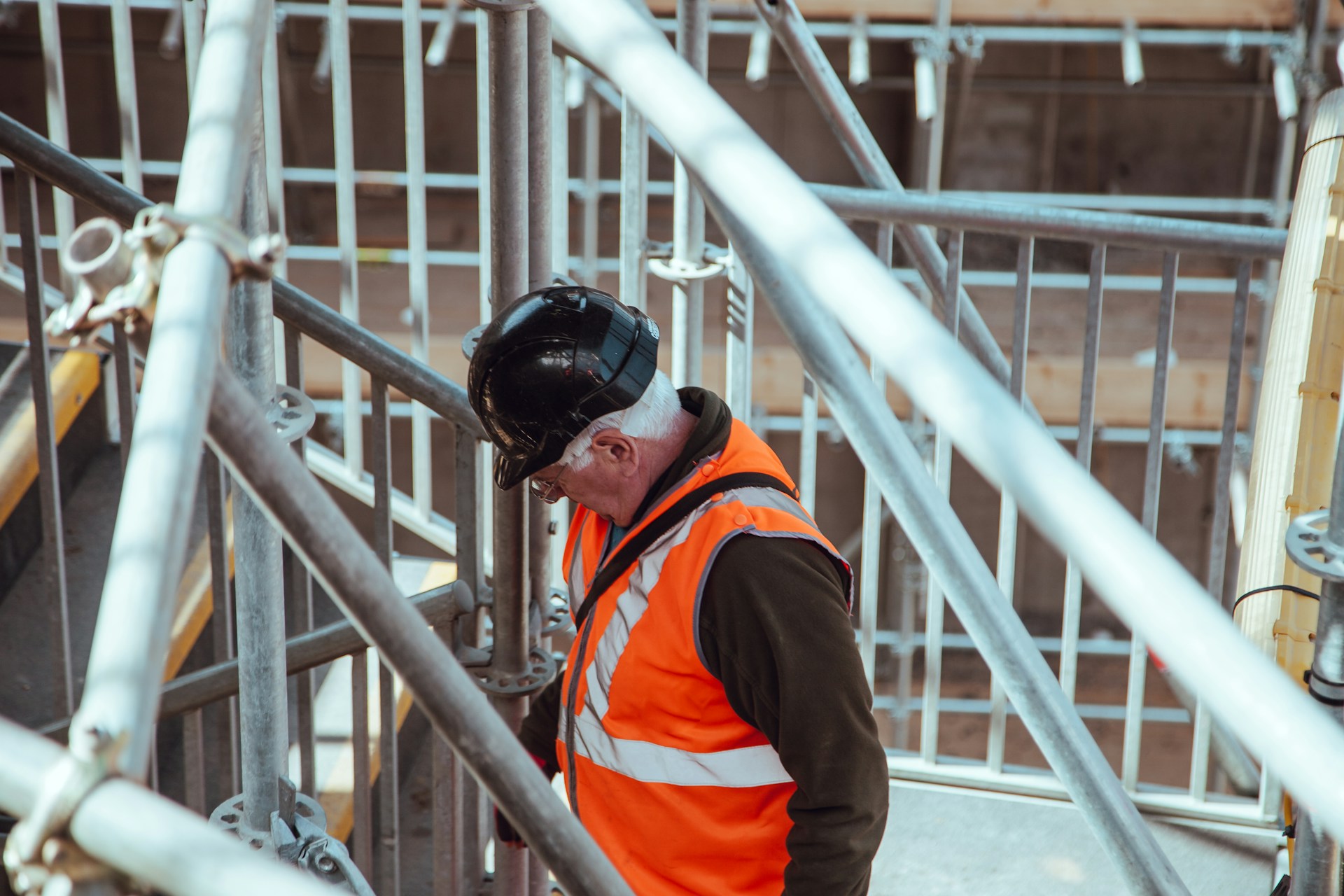
Painting render or pebbledash isn't a job you can do off a ladder. Even on a standard two-storey semi-detached, scaffolding for painting house exteriors gives your painter safe, stable access to every part of the elevation — so the prep work gets done properly and the finish looks even from top to bottom.
Why Render and Pebbledash Need Full Scaffold Access
Masonry paint applied in patches — a bit at a time from a ladder — rarely looks right once dry. The edges show, the texture doesn't blend, and any touch-up work only compounds the problem. Worse, the prep work (washing down, filling cracks, applying a stabilising solution) needs to be done systematically across the whole face of the building before any paint goes on.
That means your painter needs to work methodically from top to bottom, reach every corner, soffit, and gable, and come back the next day to the same section. Exterior paint scaffolding makes all of that possible without the painter burning energy repositioning a ladder every few minutes.
A secondary reason is drying time. Masonry paint usually needs two coats, often three on porous or heavily stained render. Each coat has a minimum drying window — typically 4–6 hours in good conditions, longer in damp or cool weather. Scaffold hire covers that waiting period too, which is why duration planning matters as much as the setup itself.
Scaffolding for Painting House Exteriors: Typical Setups
For a standard two-storey terraced or semi-detached home, the most common arrangement is a two-lift scaffold — one working platform at first-floor height and a second lift to reach the eaves and gables. If the walls are particularly tall, a three-lift rig gives the painter a more comfortable working position throughout the job.
Single-front elevation
Most painting projects only need the front or back of the house done. The scaffold runs the full width of the elevation and projects out roughly 1.2–1.5 metres from the wall. The base boards sit on the pavement or driveway, with toe boards and guardrails on every lift. If the scaffold crosses a public footpath, you'll need a pavement licence from your local council — the scaffolding company usually arranges this as part of the quote.
Wraparound scaffold
If the whole exterior needs painting — common on older properties where all the render has started to craze or blow — a wraparound scaffold goes around corners and covers all four sides. This costs more and takes a day longer to erect, but it means the painter can work on whichever face has suitable drying conditions on any given day, rather than waiting for access on one elevation to clear.
Chimney stacks and gable ends
These are easy to miss when budgeting. If your chimney stack needs painting alongside the render, the scaffold usually needs to be tied higher or extended with a separate chimney lift. Gable ends on detached houses may also need a return frame if they're fully exposed. Both add cost — make sure these are itemised in any quote you receive, rather than assumed to be included.
How Long Does the Scaffold Need to Stay Up?
Scaffold hire for painting is typically charged in weekly blocks. A single front elevation on a two-storey house, with a competent painter and decent weather, takes around 3–5 days of actual work. Most hire periods run 2–3 weeks, though, because:
- A day at each end is needed for erection and stripping
- Weather delays are common — masonry paint shouldn't be applied in rain or temperatures below about 5°C
- The second coat can't follow until the first is fully dry
- A third coat on badly stained or porous render adds another drying gap
For a full exterior on a detached house, three to four weeks of hire is more realistic. Always build in some buffer — if the scaffold comes down before the final coat has cured, getting it back up again costs time and money you hadn't planned for.
House Painting Scaffolding Cost: What to Expect
House painting scaffolding cost varies with the size of the property, the number of elevations being covered, your location, and how long the rig stays up. The table below gives a rough guide for typical two-storey residential jobs across the UK, based on 2–3 weeks' hire.
| Job type | Typical scaffold hire cost | Hire duration |
|---|---|---|
| Single front elevation (terrace or semi) | £400–£750 | 2 weeks |
| Front and back (semi-detached) | £700–£1,200 | 2–3 weeks |
| Full wraparound (detached, two-storey) | £1,200–£2,000 | 3–4 weeks |
| Full wraparound (detached, three-storey) | £1,800–£3,000+ | 4 weeks |
These figures are for scaffold hire only — they don't include the painter's labour, masonry paint, stabilising solution, or filler. In London and the South East, expect costs to sit at the higher end of each range. In the North, Midlands, Scotland, and Wales, the lower end is more typical. To estimate your scaffolding cost based on your specific property type and location, the ScaffSource calculator gives you an instant figure without needing to speak to anyone first.
Pebbledash, K-Rend, and Other Textured Finishes
The scaffold setup is broadly the same regardless of the render type, but the time the rig needs to stay up can vary significantly.
Pebbledash is highly porous and usually needs a stabilising coat before masonry paint can be applied — this adds a full drying day at the start of the job. K-Rend and monocouche renders are factory-coloured and are rarely painted, but if they've been coated before and need repainting, they're no different from standard sand-and-cement render in terms of access requirements.
Roughcast — common on older properties in Scotland and Northern Ireland — holds moisture and takes longer to dry between coats. This can push the hire period out to four weeks even on a single elevation. Bear this in mind when planning the scaffolding for painting house render on a property built before the 1960s, and build the extra time into your quote request from the outset.
Timing the Scaffold Hire Around the Painting
The scaffold should go up at least a day before painting starts, so there's no pressure to begin work before the rig has been properly checked. Most scaffolding companies carry out a handover inspection before leaving site — the person who signs the handover takes on responsibility for reporting any changes to loading or configuration during the hire period.
Talk to your painter before booking. Ask them:
- How many working days they expect the job to take, assuming reasonable weather
- Whether they plan to spray or roll (spraying is faster but more weather-sensitive)
- What their approach is on wet-weather days — do they move to another job, or wait on site?
- Whether windows, soffits, and fascias are being done at the same time or separately
Most experienced painters will tell you two to three weeks is a comfortable hire window for a front-and-back job on a semi. If yours says four days, that's achievable in good conditions — but it leaves no room for weather delays, and a rushed final coat on render rarely looks good once it cures.
Pavement Licences and Neighbour Access
If the scaffold base needs to sit on a public pavement or extend over a public footpath, your scaffolding company should arrange a licence from the local council — sometimes known as a section 169 licence under the Highways Act. This is standard for terraced houses where there's no front garden to set up in. The licence fee and the admin charge for arranging it are usually bundled into the quote, but it's worth checking this is included before you sign anything.
For semi-detached properties where the scaffold wraps around to the side return, you may need your neighbour's permission to position a base plate or tie on their land. Most neighbours are happy to agree if given reasonable notice — finding out on erection day causes delays and frustration. A quick knock on the door a week before is all it usually takes.
You can find more practical pricing guides and project advice on the ScaffSource blog.
What to Check When Comparing Quotes
Exterior paint scaffolding quotes can vary by several hundred pounds for what looks like the same job. Before accepting the lowest price, check the following:
- Does the hire period match what your painter actually needs? A quote for one week is cheaper on paper, but useless if the job takes three.
- Is the pavement licence included? Some companies quote net of this — it can add £100–£200 on top.
- Who makes the council application? Some firms leave this to you; others handle it as part of the service.
- What's the weekly extension rate? If work overruns, how much does an extra week cost?
- Are the scaffolders working to TG20 guidance or NASC standards? These are the main UK benchmarks for scaffold design and safety.
Before speaking to any contractors, get an instant price for your job with the ScaffSource calculator — it accounts for your property type, number of storeys, and postcode area, giving you a realistic baseline to compare quotes against.
The Short Version
Scaffolding for painting house render or pebbledash is straightforward to plan once you know the key variables: the number of elevations, the render type, and how long your painter needs on site. A single front elevation on a two-storey house typically costs £400–£750 for two weeks' hire. Full wraparound on a detached property can reach £2,000 or more. Budget for 2–4 weeks depending on the number of coats, the porosity of the render, and the time of year. Book the scaffold in the same conversation as the painter — their schedule and the hire period need to line up, or you'll end up paying for idle days at either end of the job.