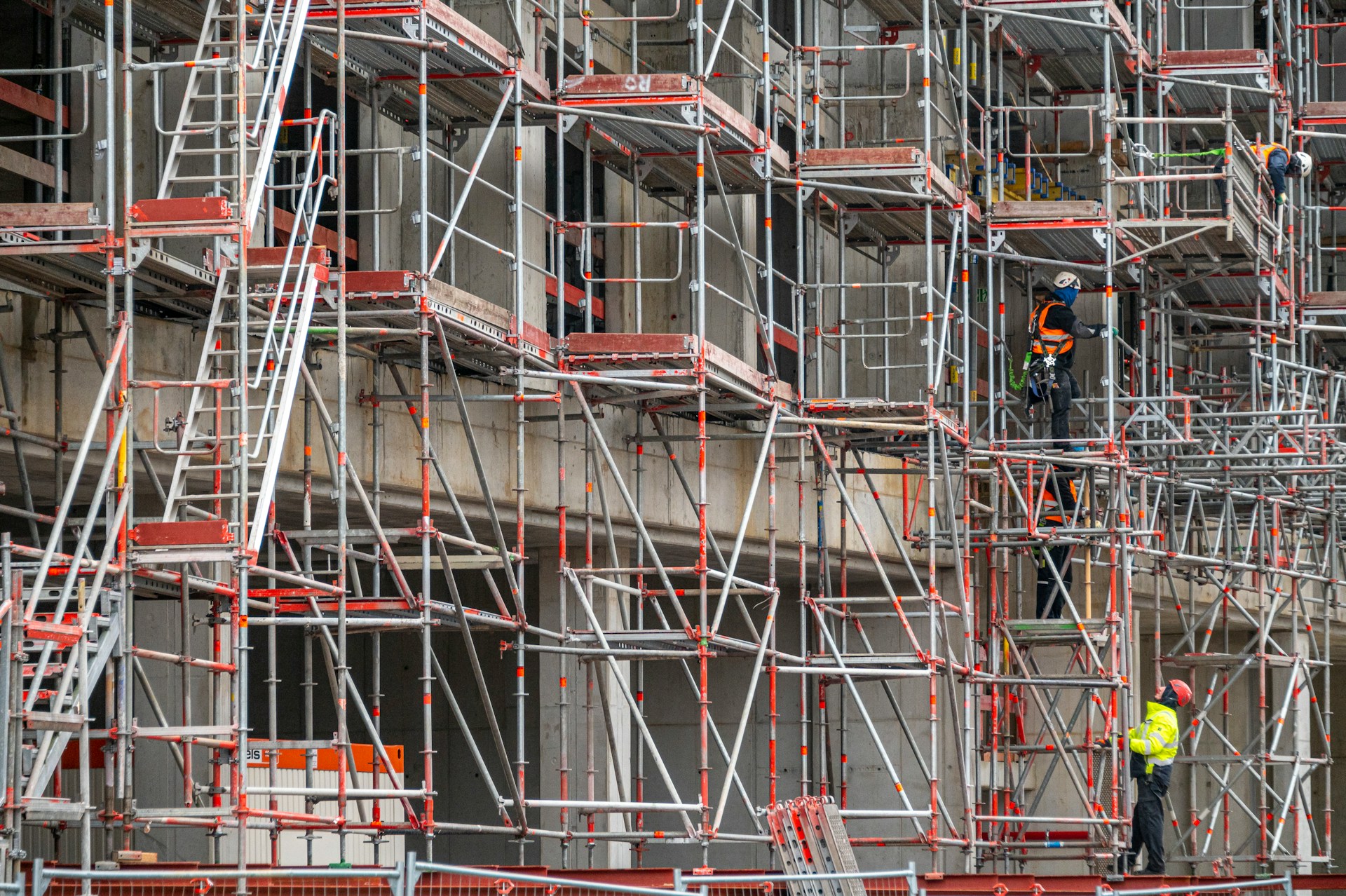
Two scaffolding quotes for the same house can differ by £300 — or even £500 — and both figures can be entirely legitimate. The scaffolding prices you see vary because of a combination of job-specific factors that each company calculates differently. Understanding what drives those differences is how you avoid overpaying and, just as importantly, avoid choosing a quote that will unravel once work begins.
Why Scaffolding Prices Vary So Much
A scaffold quote is not like a fixed-price item on a supermarket shelf. The final figure reflects a specific combination of your property's layout, the access constraints around it, how long the scaffold needs to stay up, and how the company prices its overheads. Change any one of those variables and the number changes too.
That is why two scaffolders standing in front of the same semi-detached house can legitimately produce quotes that are hundreds of pounds apart. Neither is necessarily wrong — they may simply be reading the job differently, or making different assumptions about what you need.
Access Difficulty Is the Biggest Variable
The single biggest driver of scaffolding cost variation is how easy — or difficult — the scaffold is to erect and dismantle safely. A property with clear, level pavement access is straightforward. A terraced house with no side access, a sloping driveway, or scaffolding over a busy road is a different job entirely.
Access complications that typically push prices up include:
- Working over a public pavement or road (a highway licence is usually required, adding council fees and admin time)
- Restricted access due to neighbouring properties or boundary walls
- Sloping or soft ground that requires base plates, sole boards, or kentledge
- Overhead obstructions such as cables or trees that affect the lift configuration
- Properties set back from the street, requiring a longer loading and unloading route
A scaffolder who prices access complications accurately may look expensive compared to one who prices the scaffold in isolation and then adds extras later. Always check whether a quote is fully inclusive or likely to attract additional charges once work starts.
Distance from the Depot
Scaffolding firms typically operate out of a depot or yard where their tubes, boards, and fittings are stored. The cost of transport — both getting the equipment to your site and returning to collect it — is built into every scaffold quote, but companies calculate it differently.
A regional contractor working within a 10-mile radius will have lower transport costs than a firm travelling 40 miles. Some companies absorb fuel and haulage into a flat rate; others itemise it separately. If you are in a rural area, or in a part of the country where scaffolding contractors are thin on the ground, expect transport to add meaningfully to the total. This is one reason scaffolding prices in rural Scotland or mid-Wales tend to sit above the national average.
Configuration: What Kind of Scaffold Do You Actually Need?
Not every scaffolding structure is the same, and two contractors may propose different solutions for the same property — each of which is entirely valid, but priced differently.
Independent vs putlog scaffold
An independent scaffold (also called a freestanding scaffold) stands entirely on its own and is suitable for most domestic and commercial properties. A putlog scaffold uses the building's walls as part of its structure, typically used in new-build brickwork. The type required affects both the materials needed and the time to erect. If two quotes are specifying different configurations, they are not directly comparable without adjustment.
Specialist attachments and extras
Chimney stack scaffolding, gable-end access, birdcage lifts inside a structure, or a scaffold designed to allow residents to remain in the property safely — these all change the scope. Sheeting and netting to contain debris, toe boards for public protection, or a temporary roof are charged separately by some contractors and included as standard by others. Always ask what is and is not included before accepting any figure.
Hire Period Assumptions
Most scaffold quotes include an assumed hire period — typically two to four weeks for a standard domestic job. The quote covers erection, hire for that period, and dismantling. If the job overruns (which it frequently does, particularly in roofing or building work), there will usually be a weekly or daily hire charge on top.
Two quotes that look identical in erection cost can diverge significantly if one assumes a two-week hire and another assumes four weeks. A roofer who takes six weeks on a job when the scaffold was only priced for three can leave a homeowner facing hundreds of pounds in extra hire charges. Ask every contractor what period is included in their price, and what the excess hire rate is.
Before calling anyone out for a quote, it helps to have a rough sense of what the job should cost. You can estimate your scaffolding cost using the free calculator — it factors in job type, hire period, and property configuration to give you a realistic benchmark range.
Insurance, Compliance, and What Gets Left Out
All legitimate scaffolding contractors in the UK must hold public liability insurance — typically a minimum of £5 million, though many carry £10 million. Some also carry contractors' all-risk insurance and are members of NASC (the National Access and Scaffolding Confederation), which enforces a higher standard of site safety and inspection. These memberships and insurance premiums cost money, and they are reflected in the price.
A noticeably cheap scaffold quote may indicate that corners are being cut on insurance, inspection, or compliance with Working at Height Regulations 2005. Scaffolding is one area where choosing the cheapest option without further investigation carries real risk — both physically and legally. If the scaffold fails and the contractor is underinsured, liability can fall on the property owner.
It is worth asking any contractor directly about their public liability cover, whether they use CISRS-trained operatives, and whether the scaffold will be inspected at the intervals required by law — every seven days and after any event likely to affect its stability. A firm that is vague on these points deserves closer scrutiny.
How to Compare Scaffolding Quotes Like-for-Like
The most effective approach when comparing scaffolding quotes is to ensure each one covers the same scope. Use this checklist when reviewing any scaffold quote:
- Same scaffold type and configuration (independent, putlog, or other)
- Same number of lifts and bays
- Same hire period included in the price
- Highway licence included where applicable
- Sheeting and netting included or excluded consistently across all quotes
- Dismantling and collection included
- Excess hire rate clearly stated
The table below summarises the most common line items where quotes differ, so you know exactly what to ask about during a scaffolding quote comparison:
| Quote variable | What to ask | Why it matters |
|---|---|---|
| Hire period | How many weeks are included? | Extra hire can add £100–£200+ per week |
| Highway licence | Is the council licence fee included? | Can add £100–£500 depending on the council |
| Sheeting / netting | Is debris netting or sheeting included? | Adds £100–£300 for a typical domestic job |
| Insurance level | What is the public liability limit? | Affects who is liable if something goes wrong |
| Inspection schedule | Who carries out the statutory inspection? | Required by law; sometimes charged separately |
| Transport / mobilisation | Is haulage included in the total? | Can vary significantly by distance from depot |
Once you have asked these questions, you will often find that the cheapest quote on paper is not the cheapest in practice. Equally, a higher initial quote may already include items that the cheaper one will add as extras. For more on this and related topics, browse the pricing guides on the ScaffSource blog.
Using a Price Benchmark Before You Call Anyone
One of the most practical steps you can take before inviting quotes is to arrive with a realistic price expectation already in mind. That way, you can quickly identify which quotes are in a sensible range and which are outliers worth questioning — rather than discovering after the fact that you paid well above the going rate.
If you have not already done this, see what your project should cost using the ScaffSource calculator — it takes into account job type, hire period, and location to give you a realistic range based on current UK scaffolding prices.
The Short Version
Scaffolding prices vary for legitimate reasons: access difficulty, travel distance, configuration, hire period assumptions, and the cost of proper insurance and compliance all feed into the final figure. Two quotes for the same job can differ by hundreds of pounds without either being wrong — but they may be pricing different scopes entirely.
To compare quotes properly, check that each one covers the same ground: same hire period, same extras included, same compliance requirements. Ask about the excess hire rate, the highway licence situation, and the contractor's public liability cover. A quote that looks cheaper on day one can easily cost more by the time the scaffold comes down.